Electric scooters have substituted the necessity of engine scooters in a large way. In the present time electric scooters have become equally popular among the kids as well as among the adults. This is a good alternative of conventional scooters and is a very cost effective solution. And the most important reason behind such a massive popularity of these scooters is its eco-friendly functionality. Since electric motor scooters are run by battery and there is no need to fuel or gas consumption, it doesn’t produce any smoke or sound. This is how it maintains the equilibrium of the eco-system.
Another very positive fact about these scooters is the easy maintenance solution. Electric scooters require very low maintenance. You don't need to change the engine oil, don’t need to fill up the fuel tank, you don’t need to visit service center at a regular interval, it is very easy to maintain. You just need to charge the battery on a daily basis for a period of around 6 to 8 hours. And with this amount of charge, you can travel up to 30 to 35 miles. And the speed is also enough. Users can enjoy a highest speed of 30 miles per hour which is pretty decent.
Different models of electric scooters are now available in the market. And these models are mainly designed keeping in mind the age of the users. The power of the engine varies largely with the scooters. It starts with 100w engine and there are engines which are as powerful as 1600w or 2000w. Obviously, high power engines are for adults. Most adults will choose 4000w electric scooter. There are options for kids ageing 4 to 6 years and there are options for adults. This scooter is for all. And now anybody can buy electric scooters from online. There are numerous online electric scooter suppliers who offer these scooters through their online shop. You just need to choose your model and make the payment. Your scooter will be delivered at your house.
At lifestyle Mobility they aim to please and assist people who at other times would not be able to move freely or enjoy a life that was independent. This comes from the fact that they sell electric scooters that will help assist people to get about and to be able to do every day things, they may not otherwise be able to do. At least not without the help of another person.
Thursday, September 24, 2015
Sunday, September 20, 2015
Why many people are choosing e balance scooter
With the continuously rising cost of fuel, more people are taking a keen interest in commuting by scooter. While this practice is very effective at cutting back on expenses the idea of coming to work drenched in sweat is not appealing. For those people it may be a good idea to consider choosing an e balance scooter for the trek. Still, the e-balance scooter is not for everyone so before you make the choice to switch to this type of transportation here are some things you might want to think about.
Why Choose e balance scooter?
There is a certain type of person that would choose to use an e balance scooter. If you're the kind of person who would rather not drive around several thousand pounds of metal just to go to the neighborhood market then you might want to consider this type of scooter. Or if you're someone who is struggling to keep your gas tank above the E every time you walk out of your door it may be a good option. However, if you're someone who is already driving around town the old-fashioned way you'll probably be bored with an electric scooter. These scooters are meant for those people who would prefer to be behind the wheel of a car and know very little about scooters.
Battery Options.
Batteries are an important factor in your scooter choice. You not only need to consider the amount of energy they will produce but also the amount of weight they will add to your ride. Lead batteries tend to be very heavy but cost less whereas lithium ion batteries are about a third of the weight but can be quite expensive. Outside of the initial purchase of your electric scooter the battery will be the single most expensive part of choosing an electric scooter. You need to factor in the cost of the purchase and recharging over the life the battery and how much you plan to use it.
The Motor.
E balance scooter come with several different types of motors. Some of these can reach speeds up to 20 miles per hour. Wattages can range anywhere from a low 250 all the way up to an 4000 watt scooter. Don't assume that the higher wattage means more power; it is advisable that you test drive your scooter to see how well it will perform. Whatever you decide in choosing an electric scooter, your best bet is to get a "brushless, gearless" motor since these are more likely to require less maintenance.
While e-balance scooter have turned out to be the ideal solution for many in these tight economic times, they are not suited for everyone. Those who have extremely long commutes or those who have families and such will not see the benefits of such a purchase. But, if you're one of those who can see the true value of choosing an electric scooter you will soon see the benefits of cutting fuel costs and keeping the environment clean at the same time.
Why Choose e balance scooter?
There is a certain type of person that would choose to use an e balance scooter. If you're the kind of person who would rather not drive around several thousand pounds of metal just to go to the neighborhood market then you might want to consider this type of scooter. Or if you're someone who is struggling to keep your gas tank above the E every time you walk out of your door it may be a good option. However, if you're someone who is already driving around town the old-fashioned way you'll probably be bored with an electric scooter. These scooters are meant for those people who would prefer to be behind the wheel of a car and know very little about scooters.
Battery Options.
Batteries are an important factor in your scooter choice. You not only need to consider the amount of energy they will produce but also the amount of weight they will add to your ride. Lead batteries tend to be very heavy but cost less whereas lithium ion batteries are about a third of the weight but can be quite expensive. Outside of the initial purchase of your electric scooter the battery will be the single most expensive part of choosing an electric scooter. You need to factor in the cost of the purchase and recharging over the life the battery and how much you plan to use it.
The Motor.
E balance scooter come with several different types of motors. Some of these can reach speeds up to 20 miles per hour. Wattages can range anywhere from a low 250 all the way up to an 4000 watt scooter. Don't assume that the higher wattage means more power; it is advisable that you test drive your scooter to see how well it will perform. Whatever you decide in choosing an electric scooter, your best bet is to get a "brushless, gearless" motor since these are more likely to require less maintenance.
While e-balance scooter have turned out to be the ideal solution for many in these tight economic times, they are not suited for everyone. Those who have extremely long commutes or those who have families and such will not see the benefits of such a purchase. But, if you're one of those who can see the true value of choosing an electric scooter you will soon see the benefits of cutting fuel costs and keeping the environment clean at the same time.
Tuesday, September 8, 2015
Document Legalization: Jurisdictional Issues
Three Key Questions to Ask Before Getting Started on a Legalization Project
Where is the document from?
Where will the document be used?
What type of document is it?
The answers to these questions can have a significant impact on how to proceed. Below are a few examples of how to approach a legalization project based on whether the originating and destination countries have signed onto the Hague Convention on Abolishing the Requirement of Legalization for Foreign Public Documents.
Example 1: You need to use documents from Japan (Hague party country) in the U.S. (Hague party country) and in the United Arab Emirates (UAE) (non-Hague party country). What you need: Japanese apostille for U.S. and Japanese authentication with UAE legalization for UAE.
Example 2: You need to use documents from China (non-Hague party country) in the U.S. (Hague party country) and in Brazil (non-Hague party country). What you need: Chinese authentication with legalization at U.S. and Brazilian embassy/consulate inChina.
The type of document, in certain circumstances, can be very important. Sometimes documents such as passports, educational or personal documents must be sent to one consular office, while commercial documents must be sent to another. Certain consular offices may refuse to legalize certain document types altogether, but their sister offices may accept them. Different types of documents may also require different procedures (such as Algeria only requiring translations for a Power of Attorney) or different fees (such as a fee of $30 for Good Standings, and a fee of $600 for most other corporate documents at the Embassy of the United Arab Emirates). And for many Arab countries, commercial invoices require an additional step of certification by the National U.S.-Arab Chamber of Commerce.
Procedures Can Vary Greatly Between Consular Offices for Same Country
Sometimes, the regions covered by different consular offices for a particular country overlap. In these situations, it is usually best to determine if there will be a benefit in working with one office over another. For example, when legalizing a document, some consular offices require only that a document be notarized due to the fact that the notary is registered within a specific territory. Conversely, sometimes it is necessary to have a document notarized, certified by a county clerk, authenticated by a Secretary of State, authenticated by the U.S. Department of State and even certified by a trade group before it can be legalized by the consulate. In some cases, going to one consular office versus another can make a big difference in terms of turnaround time, level of complexity and the cost associated with these projects.
Getting Accurate Information Can Be a Challenge
Most embassies/consulates post their jurisdictional policies and procedures online. The information on these websites, however, is often out of date and inaccurate. In some cases, the websites are not even in English. We have even seen one example of an embassy website containing a scam because it was set up to be editable by the general public, like a “wiki” site, but postings have clearly not been monitored.
There are also books published on the subject of document legalization/authentication, but due to frequent changes in policies and procedures, these are often outdated, even with annual publishing. (It is not unusual for embassies in Washington, D.C., for example, to change their rules on jurisdictional policy more than once a year.)
The bottom line is that if you are going to handle any legalization project, answer the three questions listed above and then start digging. Realize that the rules and procedures change all the time so you can’t assume something will be handled the same exact way as in the past. By doing your “homework” or working with a service company that is experienced in document legalization, you can help to minimize or eliminate delays and frustration.
Where is the document from?
Where will the document be used?
What type of document is it?
The answers to these questions can have a significant impact on how to proceed. Below are a few examples of how to approach a legalization project based on whether the originating and destination countries have signed onto the Hague Convention on Abolishing the Requirement of Legalization for Foreign Public Documents.
Example 1: You need to use documents from Japan (Hague party country) in the U.S. (Hague party country) and in the United Arab Emirates (UAE) (non-Hague party country). What you need: Japanese apostille for U.S. and Japanese authentication with UAE legalization for UAE.
Example 2: You need to use documents from China (non-Hague party country) in the U.S. (Hague party country) and in Brazil (non-Hague party country). What you need: Chinese authentication with legalization at U.S. and Brazilian embassy/consulate inChina.
The type of document, in certain circumstances, can be very important. Sometimes documents such as passports, educational or personal documents must be sent to one consular office, while commercial documents must be sent to another. Certain consular offices may refuse to legalize certain document types altogether, but their sister offices may accept them. Different types of documents may also require different procedures (such as Algeria only requiring translations for a Power of Attorney) or different fees (such as a fee of $30 for Good Standings, and a fee of $600 for most other corporate documents at the Embassy of the United Arab Emirates). And for many Arab countries, commercial invoices require an additional step of certification by the National U.S.-Arab Chamber of Commerce.
Procedures Can Vary Greatly Between Consular Offices for Same Country
Sometimes, the regions covered by different consular offices for a particular country overlap. In these situations, it is usually best to determine if there will be a benefit in working with one office over another. For example, when legalizing a document, some consular offices require only that a document be notarized due to the fact that the notary is registered within a specific territory. Conversely, sometimes it is necessary to have a document notarized, certified by a county clerk, authenticated by a Secretary of State, authenticated by the U.S. Department of State and even certified by a trade group before it can be legalized by the consulate. In some cases, going to one consular office versus another can make a big difference in terms of turnaround time, level of complexity and the cost associated with these projects.
Getting Accurate Information Can Be a Challenge
Most embassies/consulates post their jurisdictional policies and procedures online. The information on these websites, however, is often out of date and inaccurate. In some cases, the websites are not even in English. We have even seen one example of an embassy website containing a scam because it was set up to be editable by the general public, like a “wiki” site, but postings have clearly not been monitored.
There are also books published on the subject of document legalization/authentication, but due to frequent changes in policies and procedures, these are often outdated, even with annual publishing. (It is not unusual for embassies in Washington, D.C., for example, to change their rules on jurisdictional policy more than once a year.)
The bottom line is that if you are going to handle any legalization project, answer the three questions listed above and then start digging. Realize that the rules and procedures change all the time so you can’t assume something will be handled the same exact way as in the past. By doing your “homework” or working with a service company that is experienced in document legalization, you can help to minimize or eliminate delays and frustration.
Tuesday, September 1, 2015
China Credit Crunch Reveals Greater C2FO Opportunity
The New Yorker's recent article, "The Gift of Doubt, Albert O. Hirschman and the power of failure," by Malcolm Gladwell, inspires thoughts on the current business challenges in China. The article delves into the economic philosophy of the late economist Albert Hirschman, whose work examined whether ignorance impedes or is a precondition to progress. Hirschman's study of a thirty-two year odyssey in railroad construction led to his belief that creativity is borne of necessity rather than desire.
The article describes that during the mid-nineteenth century, a five-mile mass called the Hoosac Mountain blocked passage between the Deerfield Valley and a tributary of the Hudson, posing a significant challenge to railroad builders. Beset by miscalculations, political roadblocks and inefficient drilling methods, construction of the Hoosac Tunnel would eventually exceed its budget tenfold. Had they fully grasped the situation at the outset, the funders would never have undertaken this Herculean task. However, once engaged, the imperative of success spawned creative thinking and ingenuity that led to completion of the longest U.S. railroad at the time, contributing to the overall rapid industrial growth of the country.
According to Hirschman, "the only way in which we can bring our creative resources fully into play is by misjudging the nature of the task, by presenting it to ourselves as more routine, simple, undemanding of genuine creativity than it will turn out to be."
In the case of the China credit crunch, such ignorance has led to an economic system that is broken. The situation of unregulated shadow banking, combined with higher borrowing rates and the inability for many companies to obtain funding, has created a macroeconomic crisis condition where new thinking is required. It is the equivalent of being mid-way through the mountain before realizing the tools at-hand will not complete the task. It is an opportunity for the C2FO Market to provide a transformative solution.
The credit crisis in China has created an imperative for SMB and global Fortune 1000 companies to think more creatively about achieving cash flow efficiency, without resorting to shadow banking, factoring, and supply chain financing. Constant static and "less-than dynamic" discounting methods are not economic tools of the modern age.
Instead of borrowing the same money at increasingly higher rates, or being restricted to limited accounts receivable advance rates and excessive fees, C2FO provides an open market system that gives all businesses the opportunity to access their cash from their customers in a more efficient manner. This means lower cost, less friction and more flexibility. C2FO is the economic trans-continental railroad of our time and a tipping point for China's businesses to transform their financial system. C2FO is working capital made easy.
The article describes that during the mid-nineteenth century, a five-mile mass called the Hoosac Mountain blocked passage between the Deerfield Valley and a tributary of the Hudson, posing a significant challenge to railroad builders. Beset by miscalculations, political roadblocks and inefficient drilling methods, construction of the Hoosac Tunnel would eventually exceed its budget tenfold. Had they fully grasped the situation at the outset, the funders would never have undertaken this Herculean task. However, once engaged, the imperative of success spawned creative thinking and ingenuity that led to completion of the longest U.S. railroad at the time, contributing to the overall rapid industrial growth of the country.
According to Hirschman, "the only way in which we can bring our creative resources fully into play is by misjudging the nature of the task, by presenting it to ourselves as more routine, simple, undemanding of genuine creativity than it will turn out to be."
In the case of the China credit crunch, such ignorance has led to an economic system that is broken. The situation of unregulated shadow banking, combined with higher borrowing rates and the inability for many companies to obtain funding, has created a macroeconomic crisis condition where new thinking is required. It is the equivalent of being mid-way through the mountain before realizing the tools at-hand will not complete the task. It is an opportunity for the C2FO Market to provide a transformative solution.
The credit crisis in China has created an imperative for SMB and global Fortune 1000 companies to think more creatively about achieving cash flow efficiency, without resorting to shadow banking, factoring, and supply chain financing. Constant static and "less-than dynamic" discounting methods are not economic tools of the modern age.
Instead of borrowing the same money at increasingly higher rates, or being restricted to limited accounts receivable advance rates and excessive fees, C2FO provides an open market system that gives all businesses the opportunity to access their cash from their customers in a more efficient manner. This means lower cost, less friction and more flexibility. C2FO is the economic trans-continental railroad of our time and a tipping point for China's businesses to transform their financial system. C2FO is working capital made easy.
Thursday, August 20, 2015
The key benefits of an electric scooter
If you have ever wondered about what an electric scooter could do for you, then this is the right place for you. As cities continue to get more congested and roads are being turned into one stop places for angry and frustrated drivers, the time is right for people to venture into other modes of personal transport. One of the most popular modes of personal transport for people working in the city happens to be the electric scooter. The following are the reasons why you should also consider buying one right now:
Low cost driving
One of the key advantages of the electric scooter is the fact that it uses electricity instead of fossil fuel like petrol, which tends to be more expensive. You will therefore find yourself saving a lot of money that can then go to other aspects and areas of your life. This will allow you to enjoy your salary more. For instance, your savings could go towards preparing for retirement, or for buying something else that you have desired for a long time. This low cost driving benefit will definitely appeal to the many people who want to manage their budget and free up funds for other types of spending.
It is environmentally friendly
One of the other key advantages about this type of scooter is the fact that it does not pollute the environment as compared to other modes of transport. If you are worried about your rapidly expanding carbon footprint and want to whittle it down to a tiny fraction of what it is right now, then the cheap electric scooter is your way of getting there faster than you ever imagined. It will certainly boost your peace of mind while also contributing to a better atmosphere in your city.
Stress free commute
With such a scooter, you will be able to maneuver easily through crowded areas, thus eliminating one of the many stress points that makes people angry and frustrated by the time they make it home at the end of the day. Guess what? This electric scooter is available on wheelster.com, the most reputable online shop to get cheap electric unicycles.
Low cost driving
One of the key advantages of the electric scooter is the fact that it uses electricity instead of fossil fuel like petrol, which tends to be more expensive. You will therefore find yourself saving a lot of money that can then go to other aspects and areas of your life. This will allow you to enjoy your salary more. For instance, your savings could go towards preparing for retirement, or for buying something else that you have desired for a long time. This low cost driving benefit will definitely appeal to the many people who want to manage their budget and free up funds for other types of spending.
It is environmentally friendly
One of the other key advantages about this type of scooter is the fact that it does not pollute the environment as compared to other modes of transport. If you are worried about your rapidly expanding carbon footprint and want to whittle it down to a tiny fraction of what it is right now, then the cheap electric scooter is your way of getting there faster than you ever imagined. It will certainly boost your peace of mind while also contributing to a better atmosphere in your city.
Stress free commute
With such a scooter, you will be able to maneuver easily through crowded areas, thus eliminating one of the many stress points that makes people angry and frustrated by the time they make it home at the end of the day. Guess what? This electric scooter is available on wheelster.com, the most reputable online shop to get cheap electric unicycles.
Tuesday, August 11, 2015
China credit rating
Just as consumers check to make sure a business is legitimate before they buy, you likely do the same before your business has dealings with someone new. Whether you're looking to buy from a supplier, donate to a non-profit organization, or collaborate with another business on a project, you want to make sure you aren't taking unnecessary risks.
If you're dealing with a federally incorporated business, your search should be straightforward as those businesses are listed in Corporations Canada online database. Generally, all businesses — even federally incorporated ones — have to register in the province or territory in which they do business. This includes corporations, partnerships, and sole proprietorships (except those operating under a person's name). You may wish to seek information from the provincial registrars, some of which are available online, particularly when dealing with smaller businesses.
There are several ways you can investigate a business:
Once you've verified to your own satisfaction that a business exists, it is wise to proceed with caution. If you decide to do business with someone you haven't dealt with before, you may want to start with a smaller, less risky transaction (if possible) to see how things go, until you feel comfortable that this is a business you can trust. This will also allow you to see how the business operates in terms of deadlines and customer service. If you are not satisfied, or something still doesn't seem right, you may decide not to proceed.
Verifying information is important to protecting your business. Find out about other ways to keep your business secure and to minimize risk.
If you're dealing with a federally incorporated business, your search should be straightforward as those businesses are listed in Corporations Canada online database. Generally, all businesses — even federally incorporated ones — have to register in the province or territory in which they do business. This includes corporations, partnerships, and sole proprietorships (except those operating under a person's name). You may wish to seek information from the provincial registrars, some of which are available online, particularly when dealing with smaller businesses.
There are several ways you can investigate a business:
- Look it up. Do an Internet search using whatever information you have (name, address, phone number) and visit or call to see if it is what it claims to be.
- Put the word out on social media and look for online reviews. If the business has a presence there, someone will likely be talking about it or to its representatives.
- Ask for references from suppliers or clients (this option may not work for a very new business with few or no previous clients).
- Check with industry or trade organizations in your province or territory.
- Check with the Better Business Bureau; it provides reports on businesses and charities in both China and the United States.
- Search the china credit rating database; it's a voluntary registry, but many small Canadian businesses are listed.
Once you've verified to your own satisfaction that a business exists, it is wise to proceed with caution. If you decide to do business with someone you haven't dealt with before, you may want to start with a smaller, less risky transaction (if possible) to see how things go, until you feel comfortable that this is a business you can trust. This will also allow you to see how the business operates in terms of deadlines and customer service. If you are not satisfied, or something still doesn't seem right, you may decide not to proceed.
Verifying information is important to protecting your business. Find out about other ways to keep your business secure and to minimize risk.
Wednesday, July 29, 2015
Why Purchase Used Golf Scooters
Using a golf scooter is as trendy as riding a golf buggy; however, the former is a fancier version of the latter. If you are thinking of buying a golf scooter but are unsure as to whether it is will be the most comfortable vehicle for you or not; it makes sense not to invest high in new models. This is exactly when and why you will consider buying used models.
One of the biggest benefits of buying an old or used golf scooter is ‘pay less now and more, later’. In most cases, it is possible to invest in a two- year scooter at half the cost of a new model. Once you bring home the old one, you can test your comfort level and then invest in a new one. It is better to invest twice rather than handsomely investing once only to find that the scooter is uncomfortable.
Moreover, just as a new car, a new golf scooter depreciates the moment it leaves the collection. This again encourages one to consider buying the used one. Above all, these old scooters are priced with a thin profit margin, allowing you to resale the used model for close to what you paid for it.
When it comes to choosing between a gas or an electric powered golf cart, consider your needs. Will you be using the cart on the greens, or are you looking for a utility vehicle for you property? Decide where and how you want to drive the cart before choosing which type is best suited to your particular needs.
One of the biggest benefits of buying an old or used golf scooter is ‘pay less now and more, later’. In most cases, it is possible to invest in a two- year scooter at half the cost of a new model. Once you bring home the old one, you can test your comfort level and then invest in a new one. It is better to invest twice rather than handsomely investing once only to find that the scooter is uncomfortable.
Moreover, just as a new car, a new golf scooter depreciates the moment it leaves the collection. This again encourages one to consider buying the used one. Above all, these old scooters are priced with a thin profit margin, allowing you to resale the used model for close to what you paid for it.
When it comes to choosing between a gas or an electric powered golf cart, consider your needs. Will you be using the cart on the greens, or are you looking for a utility vehicle for you property? Decide where and how you want to drive the cart before choosing which type is best suited to your particular needs.
Monday, July 20, 2015
Practical guide on how to verify chinese company?
Thanks to ecommerce, companies in US are able to sell products/service to China, a country you have not yet visited, you don’t speak the language, you are not aware if the legal systems are similar, you don’t know and don’t have the resource to know if the counterpart Chinese companies are real.
So we face a question: How can I check Chinese company? How to check the legitimacy of your Chinese buyers/partners? Are they a real company.
Some facts:
China don’t have a organization like BBB(Better Business Bureau) in US, where you could check the legitimacy and background of a Chinese company.
Chinese administration of industry and commerce is the governing body that in charge of company registration. However, they don’t have a nationwide website or database system that open to public to inquiry the authentication of Chinese companies.
Sourcing China blog recently published an excellent article, sharing how to verify Chinese company without visiting their premise. Here are some tips on their blog,just for chinese authentication:
1) Do they have company bank account
Only legally incorporated companies can have business bank account. If the Chinese company insist you to pay their personal account only, be cautious.
2) Visit local AIC websites
Even though the national AIC don’t have a nationwide system allow you to check the legitimacy of Chinese company. However, some(not a lot) local AIC do allow you to use their websites to check the legitimacy of Chinese company.
3) Websites and Email
If they don’t have websites, use public email account like 163, sohu, sina, it is negative.
4) Hongkong offshore company
Be cautions doing business with Hongkong company, but operates only in mainland China. They are shell company. Read this article to learn the risk.
So we face a question: How can I check Chinese company? How to check the legitimacy of your Chinese buyers/partners? Are they a real company.
Some facts:
China don’t have a organization like BBB(Better Business Bureau) in US, where you could check the legitimacy and background of a Chinese company.
Chinese administration of industry and commerce is the governing body that in charge of company registration. However, they don’t have a nationwide website or database system that open to public to inquiry the authentication of Chinese companies.
Sourcing China blog recently published an excellent article, sharing how to verify Chinese company without visiting their premise. Here are some tips on their blog,just for chinese authentication:
1) Do they have company bank account
Only legally incorporated companies can have business bank account. If the Chinese company insist you to pay their personal account only, be cautious.
2) Visit local AIC websites
Even though the national AIC don’t have a nationwide system allow you to check the legitimacy of Chinese company. However, some(not a lot) local AIC do allow you to use their websites to check the legitimacy of Chinese company.
3) Websites and Email
If they don’t have websites, use public email account like 163, sohu, sina, it is negative.
4) Hongkong offshore company
Be cautions doing business with Hongkong company, but operates only in mainland China. They are shell company. Read this article to learn the risk.
Monday, September 2, 2013
New study explores efficacy of vasectomies
For the estimated 80 million domestic cats that are kept as house pets, there are as many roaming free.
Those numbers shouldn't be surprising, considering the rate at which felines are able to reproduce. I've previously written about the overpopulation issue with cats and dogs, and getting these numbers in check has been the focus of many. Spay and neuter programs and protocols are helping to make progress.
First, understand that from a biological standpoint, we are in a battle with pets. Reproductive success drives evolution, pure and simple. It's the strongest biological factor in any species. Biology has a way of taking over, jumping any hurdle that is put in its path and compensating. The pets themselves have no control over their biological drives, and therefore can't curb their behavior when it comes reproducing.
Comprised of a clowder of free-roaming cats that are the descendants of unaltered tame cats somewhere in their ancestral line, the social structure is by no means random: at its core, it has at least one sexually-active dominant male and fertile females who are often well-bonded and who will help care for their respective litters and each other. Colonies are often formed around shelter — be it a wooded area, abandoned house, under a porch area that doesn’t get that much foot traffic or something else — and a food source of some sort.
Because of their unique resiliency, feral cat colonies have posed a special challenge. The structure and reproductive patterns of these groups have piqued the interest of researchers and got them thinking: Could the way that a feline in a feral colony is sterilized impact the overall numbers of new litters that are born?
First, TVHR is not a common way to address feral cat populations. Trap, neuter and release TNR on the other hand, is a more widely-accepted approach to controlling feral cat colony populations, and for a lot of reasons.
Because TVHR isn’t put into use as much and because the life span of feral cats is far shorter — an average of three years as opposed to the 15 that their Indoor Positioning System — it’s been difficult to extrapolate the long-term data that helps to give some solid numbers that researchers would be looking for. Each computer run simulated the feral cat population over 6,000 days, tracking individual cats on a daily basis, thus predicting effectiveness of TVHR.
Those two things are very advantageous: the cats don't reproduce, and because they no longer produce reproductive hormones, behaviors like fighting, spraying and howling are reduced, addressing the needs of the community-at-large. Behaviors like those would be troublesome to anyone who lives in close proximity to a feral colony.
A possible advantage to vasectomy as opposed to neuter procedure is that though the tube that carries semen is cut, the animal retains their testicles and their reproductive hormones. For that reason, upon being returned to the colony, the cat preserves his dominant position and can continue mating with females without producing kittens — and quite possibly protect their turf from other male competitors that are “intact”.
Conversely, a neutered male loses his dominant position in the colony, and the next most dominant male takes his place — and the cycle continues. It's important to note that when a female cat that has not been sterilized mates with a male that has had a vasectomy, she enters a 45-day pseudo-pregnancy, dipping the chance of fertile mating even further.
Your DSLR probably came bundled with a standard 18-55mm lens. This is a solid jack-of-all-trades that sports a nice wide angle and reasonable focal length. However, any photographer worth their salt needs to bolster their kit with a few additional lenses — otherwise you might as well have stuck with a high-end compact camera. In almost all cases, the type of lens employed will have a bigger effect on image quality than the camera itself.
For most photographers, a telephoto zoom lens makes the most sense for your next purchase. Most DSLR models offer affordable 55-200mm lenses that are great for capturing faraway action, such as animals at the zoo.
An ultra-wide-angle zoom lens is also worth putting on your shopping list: this will allow you to take great panoramas without any tedious stitching and are also great when you need to capture everyone in crowded group photos, making them a staple of wedding photographers. On the other end of the spectrum is the macro lens with a fixed aperture: these let you get up close and personal with the camera’s subject and are a great way of documenting nature.
One of the simplest ways to improve your DSLR’s performance is to install the latest firmware upgrade. These are usually available on the manufacturer’s website and may include everything from improved auto-focus tracking to recording RAW video files. Firmware updates are also free, which is good news for photographers on a budget.
In addition to official vendor updates, you can also find custom, third-party firmware for many DSLR models. These are capable of super-charging your camera with a wide range of features that the manufacturer didn’t include.
No really. Many dismiss 3D as a fading fad, but when it comes to user-created content the technology is more than just a gimmick. It’s capable of adding a whole new dimension to your photos both literally and figuratively. Imagine watching your baby’s first steps in a format that you can almost reach out and touch — it might seem vaguely cool now, but what about in twenty years when you kids have flown the coop? Adding 3D functionality to your DSLR will make your recorded memories far more tangible.
One recent example is the Kúla Deeper: a snap-on hardware accessory that allows you to create 3D photos and movies. The accessory adds a pair of mirrors on either side of your DSLR lens for dual image capture. The Kúla Deeper works with most regular DSLRs although viewing the results naturally requires a 3D-compatible display. Charmingly, there’s also an Anaglyph mode which lets you watch the movies with a pair of retro red-and-blue 3D glasses. Bless.
Read the full products at http://www.ecived.com/en/!
Those numbers shouldn't be surprising, considering the rate at which felines are able to reproduce. I've previously written about the overpopulation issue with cats and dogs, and getting these numbers in check has been the focus of many. Spay and neuter programs and protocols are helping to make progress.
First, understand that from a biological standpoint, we are in a battle with pets. Reproductive success drives evolution, pure and simple. It's the strongest biological factor in any species. Biology has a way of taking over, jumping any hurdle that is put in its path and compensating. The pets themselves have no control over their biological drives, and therefore can't curb their behavior when it comes reproducing.
Comprised of a clowder of free-roaming cats that are the descendants of unaltered tame cats somewhere in their ancestral line, the social structure is by no means random: at its core, it has at least one sexually-active dominant male and fertile females who are often well-bonded and who will help care for their respective litters and each other. Colonies are often formed around shelter — be it a wooded area, abandoned house, under a porch area that doesn’t get that much foot traffic or something else — and a food source of some sort.
Because of their unique resiliency, feral cat colonies have posed a special challenge. The structure and reproductive patterns of these groups have piqued the interest of researchers and got them thinking: Could the way that a feline in a feral colony is sterilized impact the overall numbers of new litters that are born?
First, TVHR is not a common way to address feral cat populations. Trap, neuter and release TNR on the other hand, is a more widely-accepted approach to controlling feral cat colony populations, and for a lot of reasons.
Because TVHR isn’t put into use as much and because the life span of feral cats is far shorter — an average of three years as opposed to the 15 that their Indoor Positioning System — it’s been difficult to extrapolate the long-term data that helps to give some solid numbers that researchers would be looking for. Each computer run simulated the feral cat population over 6,000 days, tracking individual cats on a daily basis, thus predicting effectiveness of TVHR.
Those two things are very advantageous: the cats don't reproduce, and because they no longer produce reproductive hormones, behaviors like fighting, spraying and howling are reduced, addressing the needs of the community-at-large. Behaviors like those would be troublesome to anyone who lives in close proximity to a feral colony.
A possible advantage to vasectomy as opposed to neuter procedure is that though the tube that carries semen is cut, the animal retains their testicles and their reproductive hormones. For that reason, upon being returned to the colony, the cat preserves his dominant position and can continue mating with females without producing kittens — and quite possibly protect their turf from other male competitors that are “intact”.
Conversely, a neutered male loses his dominant position in the colony, and the next most dominant male takes his place — and the cycle continues. It's important to note that when a female cat that has not been sterilized mates with a male that has had a vasectomy, she enters a 45-day pseudo-pregnancy, dipping the chance of fertile mating even further.
Your DSLR probably came bundled with a standard 18-55mm lens. This is a solid jack-of-all-trades that sports a nice wide angle and reasonable focal length. However, any photographer worth their salt needs to bolster their kit with a few additional lenses — otherwise you might as well have stuck with a high-end compact camera. In almost all cases, the type of lens employed will have a bigger effect on image quality than the camera itself.
For most photographers, a telephoto zoom lens makes the most sense for your next purchase. Most DSLR models offer affordable 55-200mm lenses that are great for capturing faraway action, such as animals at the zoo.
An ultra-wide-angle zoom lens is also worth putting on your shopping list: this will allow you to take great panoramas without any tedious stitching and are also great when you need to capture everyone in crowded group photos, making them a staple of wedding photographers. On the other end of the spectrum is the macro lens with a fixed aperture: these let you get up close and personal with the camera’s subject and are a great way of documenting nature.
One of the simplest ways to improve your DSLR’s performance is to install the latest firmware upgrade. These are usually available on the manufacturer’s website and may include everything from improved auto-focus tracking to recording RAW video files. Firmware updates are also free, which is good news for photographers on a budget.
In addition to official vendor updates, you can also find custom, third-party firmware for many DSLR models. These are capable of super-charging your camera with a wide range of features that the manufacturer didn’t include.
No really. Many dismiss 3D as a fading fad, but when it comes to user-created content the technology is more than just a gimmick. It’s capable of adding a whole new dimension to your photos both literally and figuratively. Imagine watching your baby’s first steps in a format that you can almost reach out and touch — it might seem vaguely cool now, but what about in twenty years when you kids have flown the coop? Adding 3D functionality to your DSLR will make your recorded memories far more tangible.
One recent example is the Kúla Deeper: a snap-on hardware accessory that allows you to create 3D photos and movies. The accessory adds a pair of mirrors on either side of your DSLR lens for dual image capture. The Kúla Deeper works with most regular DSLRs although viewing the results naturally requires a 3D-compatible display. Charmingly, there’s also an Anaglyph mode which lets you watch the movies with a pair of retro red-and-blue 3D glasses. Bless.
Read the full products at http://www.ecived.com/en/!
Defining casual luxury
I love its change of seasons and the energy that the younger generation of emerging designers bring to the table. Also, when purchasing piece after piece of boutiquery, the texture and colour of fabric is what informs me and gets me charged. Retail should, for the most part, be enjoyable, regardless of whether you're buying a lipstick or a car; and more than anything else, that is what I want for every person that walks through our doors. Life is kind of tough for everyone right now; everyone's a bit hard-pressed, so when you have that opportunity or that moment to have that interaction, they should be made to feel good; to be left with a great impression.
I must say, through this business I've met some great individuals. I aspire to turn my customers into friends. It's nice to be able to say to them "How are your kids?", "How's your family?" or "What happened last weekend?" Boutiques are able to connect to customers in a way big department stores or shopping online can't, so it's important to me to be afforded the privilege to cultivate those relationships.
I don't like to dress up, I've left that behind me, now. I really only dress up when I have to; whatever function requires me to and, thankfully, I don't go to a lot of those. I love a casual look that I can start out in the morning and can take me right into the evening, because when life takes over, I seem to always be going by the 'seat of my pants'. The concept of going home to change rarely happens for me very well and fortunately, I'm good with that. I like to have pieces in my wardrobe that meet the requirement of a full day: work, lunch, dinner, if I have to meet up with friends for a night out. Jamaica's relaxed lifestyle and the fact that I don't work corporate allow me to fully exercise my casual tastes.
As you mature, I think one tends to learn more about oneself and what we naturally prefer and so, with that said, I like to be comfortable; that's my thing. I don't want to have to be constantly readjusting my outfit once I'm out the door, I want to be left to concentrate on the other things in my life that need to get done. I don't have a lot of clothes nor a huge wardrobe, but I like timeless pieces that I can keep and wear over and real time Location system. I know many people don't like to wear the same thing twice, but I definitely play favourites. Whenever a much-loved piece 'dies', I'm really saddened and find myself organising the hunt for its swift replacement.
They're not playing slots or video poker. No, they're trying their hand at upcoming games such as "Titanfall" and "Ryse."
This is the GameStop Expo. The world's largest video game retailer first organized the gathering of its most passionate customers last year during its annual meeting of store managers. While the Electronic Entertainment Expo in Los Angeles is no longer open to the public, the GameStop Expo offers everyday gamers a chance to preview upcoming titles and hardware.
The expo's more than 5,000 attendees waited in snaking lines inside a cavernous Sands Expo hall early Wednesday to test-drive Microsoft's Xbox One and Sony's PlayStation 4, the next-generation systems due out this November. "Call of Duty: Ghosts," "Titanfall," "Ryse: Son of Rome" and "Battlefield 4" were among the most popular games on display.
"I'm here to see and play all the next-gen consoles and games for myself," Shawn Smoak, a 22-year-old self-professed "Sony fanboy," said while waiting to try out "Titanfall." "You can read everything you possibly can about them online, but until you actually get your hands on the controller, you don't really know anything. That's what this is all about."
Beyond the expo hall in meeting rooms at the Venetian casino and Sands convention center, more than 5,000 managers from company's nearly 4,500 stores in the U.S. spent three days learning all about how to sell new games and hardware to customers like those at its expo. The retailer currently boasts about 25 million members in its PowerUp Rewards program.
GameStop launched the gamer gathering last year after the Grapevine, Texas-based company's international divisions successfully hosted their own events. (Last year's EB Games Expo in Australia welcomed more than 30,000 attendees.) Admission for Wednesday's event ranged from $20 for student tickets to $100 for VIP access that included early entry.
"We didn't want to be in the live events business," said GameStop CEO Paul Raines. "This was something that was pulled out of us. The customers wanted it. The PowerUp Rewards community was asking for us to give them an opportunity to see new products and games. People love it because this is the only place where they can play `Titanfall' right now."
Frazier, a black sociologist at Howard University and the first black president of the American Sociological Society published the first edition of his book in France in 1957 and it was later translated into English and a second edition was published in 1962. Much of the book is dated as the size and importance of the black middle-class has dramatically increased over the past 50 years. Blacks have become an integral part of all areas of American life up to and including the presidency of the United States. Yet the perception of exclusion remains. Forty years after the publication of "Black Bourgeoisie," Ellis Cose published "The Rage of a Privileged Class" that was a look at the black middle-class. In it he details the frustrations of black professionals who in spite of their greatly improved status in American society still felt marginalized.
In spite of the passage of the civil rights laws of the 1960's and progress made by blacks over the last 50 years, events such as the Zimmerman trial reveal to what extent we are still two separate societies. The explanation that would be given by most black commentators is the persistence of racism. The basis of disparate impact law is the notion that if imbalances exist in the numbers of minorities in an occupation, the starting assumption is that the reason is racial prejudice. By analogy, if a white Hispanic shoots an unarmed black teenager, the reason is racial animus and the burden of proof is on the white to prove otherwise beyond a reasonable doubt.
Read the full products at http://www.ecived.com/en/!
I must say, through this business I've met some great individuals. I aspire to turn my customers into friends. It's nice to be able to say to them "How are your kids?", "How's your family?" or "What happened last weekend?" Boutiques are able to connect to customers in a way big department stores or shopping online can't, so it's important to me to be afforded the privilege to cultivate those relationships.
I don't like to dress up, I've left that behind me, now. I really only dress up when I have to; whatever function requires me to and, thankfully, I don't go to a lot of those. I love a casual look that I can start out in the morning and can take me right into the evening, because when life takes over, I seem to always be going by the 'seat of my pants'. The concept of going home to change rarely happens for me very well and fortunately, I'm good with that. I like to have pieces in my wardrobe that meet the requirement of a full day: work, lunch, dinner, if I have to meet up with friends for a night out. Jamaica's relaxed lifestyle and the fact that I don't work corporate allow me to fully exercise my casual tastes.
As you mature, I think one tends to learn more about oneself and what we naturally prefer and so, with that said, I like to be comfortable; that's my thing. I don't want to have to be constantly readjusting my outfit once I'm out the door, I want to be left to concentrate on the other things in my life that need to get done. I don't have a lot of clothes nor a huge wardrobe, but I like timeless pieces that I can keep and wear over and real time Location system. I know many people don't like to wear the same thing twice, but I definitely play favourites. Whenever a much-loved piece 'dies', I'm really saddened and find myself organising the hunt for its swift replacement.
They're not playing slots or video poker. No, they're trying their hand at upcoming games such as "Titanfall" and "Ryse."
This is the GameStop Expo. The world's largest video game retailer first organized the gathering of its most passionate customers last year during its annual meeting of store managers. While the Electronic Entertainment Expo in Los Angeles is no longer open to the public, the GameStop Expo offers everyday gamers a chance to preview upcoming titles and hardware.
The expo's more than 5,000 attendees waited in snaking lines inside a cavernous Sands Expo hall early Wednesday to test-drive Microsoft's Xbox One and Sony's PlayStation 4, the next-generation systems due out this November. "Call of Duty: Ghosts," "Titanfall," "Ryse: Son of Rome" and "Battlefield 4" were among the most popular games on display.
"I'm here to see and play all the next-gen consoles and games for myself," Shawn Smoak, a 22-year-old self-professed "Sony fanboy," said while waiting to try out "Titanfall." "You can read everything you possibly can about them online, but until you actually get your hands on the controller, you don't really know anything. That's what this is all about."
Beyond the expo hall in meeting rooms at the Venetian casino and Sands convention center, more than 5,000 managers from company's nearly 4,500 stores in the U.S. spent three days learning all about how to sell new games and hardware to customers like those at its expo. The retailer currently boasts about 25 million members in its PowerUp Rewards program.
GameStop launched the gamer gathering last year after the Grapevine, Texas-based company's international divisions successfully hosted their own events. (Last year's EB Games Expo in Australia welcomed more than 30,000 attendees.) Admission for Wednesday's event ranged from $20 for student tickets to $100 for VIP access that included early entry.
"We didn't want to be in the live events business," said GameStop CEO Paul Raines. "This was something that was pulled out of us. The customers wanted it. The PowerUp Rewards community was asking for us to give them an opportunity to see new products and games. People love it because this is the only place where they can play `Titanfall' right now."
Frazier, a black sociologist at Howard University and the first black president of the American Sociological Society published the first edition of his book in France in 1957 and it was later translated into English and a second edition was published in 1962. Much of the book is dated as the size and importance of the black middle-class has dramatically increased over the past 50 years. Blacks have become an integral part of all areas of American life up to and including the presidency of the United States. Yet the perception of exclusion remains. Forty years after the publication of "Black Bourgeoisie," Ellis Cose published "The Rage of a Privileged Class" that was a look at the black middle-class. In it he details the frustrations of black professionals who in spite of their greatly improved status in American society still felt marginalized.
In spite of the passage of the civil rights laws of the 1960's and progress made by blacks over the last 50 years, events such as the Zimmerman trial reveal to what extent we are still two separate societies. The explanation that would be given by most black commentators is the persistence of racism. The basis of disparate impact law is the notion that if imbalances exist in the numbers of minorities in an occupation, the starting assumption is that the reason is racial prejudice. By analogy, if a white Hispanic shoots an unarmed black teenager, the reason is racial animus and the burden of proof is on the white to prove otherwise beyond a reasonable doubt.
Read the full products at http://www.ecived.com/en/!
Wednesday, August 28, 2013
Remembering Martin Luther King
The final refrain of Martin Luther King Jr.'s most famous speech will echo around the world as bells from churches, schools and historical monuments "let freedom ring" in celebration of a powerful moment in civil rights history.
Organizers said sites in nearly every state will ring their bells at 3 p.m. their time Wednesday or at 3 p.m. EDT, the hour when King delivered his "I Have a Dream" speech in Washington.Commemorations are planned from the site of the speech in Washington to the far reaches of Alaska, where participants plan to ring cow bells along with church bells in Juneau.
"When we allow freedom to ring - when we let it ring from every city and every hamlet, from every state and every city, we will be able to speed up that day when all of God's children, black men and white men, Jews and Gentiles, Protestants and Catholics, will be able to join hands and sing in the words of the old Negro spiritual, `Free at last, free at last, great God almighty, we are free at last," King said in closing.
On Wednesday, bells will answer his call from each of the specific states King named, as well as at other sites around the nation and the world. At the Lincoln Memorial, President Barack Obama and former presidents Bill Clinton and Jimmy Carter will join members of the King family and indoor Tracking. John Lewis, who also spoke at the March on Washington, in ringing a bell that hung in the 16th Street Baptist Church in Birmingham, Ala., before the church was bombed in 1963, organizers said.
International commemorations will be held at London's Trafalgar Square, as well as in the nations of Japan, Switzerland, Nepal and Liberia. London Mayor Boris Johnson has said King's speech resonates around the world and continues to inspire people as one of the great pieces of oratory.
"The response to our call to commemorate the March on Washington and my father's `I Have a Dream' speech has been overwhelming," King's daughter, the Rev. Bernice King, said in a written statement.Some of the sites that will host ceremonies are symbolic, such as the Brown v. Board of Education National Historic Site in Topeka, Kan., a monument to the landmark Supreme Court case that outlawed segregated schools in 1954. Bells will also be rung at Lookout Mountain in Tennessee and Stone Mountain in Georgia, a site with a Confederate memorial that King referenced in his speech.
In the nation's capital, numerous organizations and churches will ring their bells at 3 p.m., including the Smithsonian Institution on the National Mall. Washington National Cathedral will play a series of tunes and spirituals on its carillon from the church's central bell tower, including "Lift Every Voice and Sing," "Mine Eyes Have Seen the Glory," "Amazing Grace," "We Shall Overcome" and "My Country `tis of Thee."The Very Rev. Gary Hall, the cathedral's dean, said bell ringing is a symbol of freedom in the nation's history and that many churches are trying to answer King's call to be faithful to the roots of the civil rights movement.
"It's a kind of proclamation of our aspirations for the expansion of freedom for all people," he said. "It's always important to remember that the civil rights movement started largely as a church movement. ... It was essentially a group of black clergy with some white allies."
King preached his final Sunday sermon at the National Cathedral in 1968 before traveling on to Memphis, Tenn., where he was assassinated. King had been turning his attention more toward economic inequalities with his Poor People's Campaign, moving beyond solely racial issues to talk about all poor people and high unemployment.
His presence at the commemorative ceremony Wednesday will embody the fulfilled dreams of the hundreds of thousands who rallied there 50 years ago for racial equality - and will personify the continued struggle for that elusive goal.
When he became president, Obama blasted through a heavy barrier that many before him had only pushed against. But his presidency has been marred by racist backlash and his administration has found itself refighting battles already thought won, such as ensuring equal access to the polls.
Obama is expected to speak just after an organized ringing of bells by churches and others at 3 p.m. EDT, the time when the Rev. Martin Luther King Jr. delivered his spellbinding "I Have a Dream" speech. Obama will be joined by former Presidents Jimmy Carter and Bill Clinton at the memorial's steps. Other luminaries include Lynda Bird Johnson Robb, daughter of President Lyndon Johnson, who signed the 1964 Civil Rights Act and the 1965 Voting Rights Act.
A march, led by a replica of a transit bus that civil rights leader Rosa Parks rode when she refused to give up her seat to a white man in 1955, and an interfaith service also were planned for Wednesday morning. A march held Saturday drew tens of thousands to the Lincoln Memorial.
Obama considers the 1963 march a "seminal event" and part of his generation's "formative memory." A half-century after the march, he said, is a good time to reflect on how far the country has come and how far it still has to go.
The first lady spoke Tuesday before a screening of the documentary "The Powerbroker: Whitney Young's Fight for Civil Rights." It follows Young's rise from segregated Kentucky to leader of the National Urban League during the 1960s.
Young was one of the organizers for the 1963 March on Washington, which featured Martin Luther King Jr.'s "I Have A Dream" speech. Mrs. Obama is scheduled to join President Barack Obama as he makes a speech Wednesday commemorating the 50th anniversary of the march.
"For every Dr. King, there is a Whitney Young or a Roy Wilkins or a Dorothy Height, each of whom played a critical role in the struggle for change," she said before the screening at the Eisenhower Executive Office Building, part of the White House complex.
Mrs. Obama said she learned from the documentary that Young drew from his intelligence and sense of humor to face discrimination and challenges. He worked with three presidential administrations, community leaders, business executives and regular citizens to champion for race relations.
Read the full products at www.ecived.com/en/!
Organizers said sites in nearly every state will ring their bells at 3 p.m. their time Wednesday or at 3 p.m. EDT, the hour when King delivered his "I Have a Dream" speech in Washington.Commemorations are planned from the site of the speech in Washington to the far reaches of Alaska, where participants plan to ring cow bells along with church bells in Juneau.
"When we allow freedom to ring - when we let it ring from every city and every hamlet, from every state and every city, we will be able to speed up that day when all of God's children, black men and white men, Jews and Gentiles, Protestants and Catholics, will be able to join hands and sing in the words of the old Negro spiritual, `Free at last, free at last, great God almighty, we are free at last," King said in closing.
On Wednesday, bells will answer his call from each of the specific states King named, as well as at other sites around the nation and the world. At the Lincoln Memorial, President Barack Obama and former presidents Bill Clinton and Jimmy Carter will join members of the King family and indoor Tracking. John Lewis, who also spoke at the March on Washington, in ringing a bell that hung in the 16th Street Baptist Church in Birmingham, Ala., before the church was bombed in 1963, organizers said.
International commemorations will be held at London's Trafalgar Square, as well as in the nations of Japan, Switzerland, Nepal and Liberia. London Mayor Boris Johnson has said King's speech resonates around the world and continues to inspire people as one of the great pieces of oratory.
"The response to our call to commemorate the March on Washington and my father's `I Have a Dream' speech has been overwhelming," King's daughter, the Rev. Bernice King, said in a written statement.Some of the sites that will host ceremonies are symbolic, such as the Brown v. Board of Education National Historic Site in Topeka, Kan., a monument to the landmark Supreme Court case that outlawed segregated schools in 1954. Bells will also be rung at Lookout Mountain in Tennessee and Stone Mountain in Georgia, a site with a Confederate memorial that King referenced in his speech.
In the nation's capital, numerous organizations and churches will ring their bells at 3 p.m., including the Smithsonian Institution on the National Mall. Washington National Cathedral will play a series of tunes and spirituals on its carillon from the church's central bell tower, including "Lift Every Voice and Sing," "Mine Eyes Have Seen the Glory," "Amazing Grace," "We Shall Overcome" and "My Country `tis of Thee."The Very Rev. Gary Hall, the cathedral's dean, said bell ringing is a symbol of freedom in the nation's history and that many churches are trying to answer King's call to be faithful to the roots of the civil rights movement.
"It's a kind of proclamation of our aspirations for the expansion of freedom for all people," he said. "It's always important to remember that the civil rights movement started largely as a church movement. ... It was essentially a group of black clergy with some white allies."
King preached his final Sunday sermon at the National Cathedral in 1968 before traveling on to Memphis, Tenn., where he was assassinated. King had been turning his attention more toward economic inequalities with his Poor People's Campaign, moving beyond solely racial issues to talk about all poor people and high unemployment.
His presence at the commemorative ceremony Wednesday will embody the fulfilled dreams of the hundreds of thousands who rallied there 50 years ago for racial equality - and will personify the continued struggle for that elusive goal.
When he became president, Obama blasted through a heavy barrier that many before him had only pushed against. But his presidency has been marred by racist backlash and his administration has found itself refighting battles already thought won, such as ensuring equal access to the polls.
Obama is expected to speak just after an organized ringing of bells by churches and others at 3 p.m. EDT, the time when the Rev. Martin Luther King Jr. delivered his spellbinding "I Have a Dream" speech. Obama will be joined by former Presidents Jimmy Carter and Bill Clinton at the memorial's steps. Other luminaries include Lynda Bird Johnson Robb, daughter of President Lyndon Johnson, who signed the 1964 Civil Rights Act and the 1965 Voting Rights Act.
A march, led by a replica of a transit bus that civil rights leader Rosa Parks rode when she refused to give up her seat to a white man in 1955, and an interfaith service also were planned for Wednesday morning. A march held Saturday drew tens of thousands to the Lincoln Memorial.
Obama considers the 1963 march a "seminal event" and part of his generation's "formative memory." A half-century after the march, he said, is a good time to reflect on how far the country has come and how far it still has to go.
The first lady spoke Tuesday before a screening of the documentary "The Powerbroker: Whitney Young's Fight for Civil Rights." It follows Young's rise from segregated Kentucky to leader of the National Urban League during the 1960s.
Young was one of the organizers for the 1963 March on Washington, which featured Martin Luther King Jr.'s "I Have A Dream" speech. Mrs. Obama is scheduled to join President Barack Obama as he makes a speech Wednesday commemorating the 50th anniversary of the march.
"For every Dr. King, there is a Whitney Young or a Roy Wilkins or a Dorothy Height, each of whom played a critical role in the struggle for change," she said before the screening at the Eisenhower Executive Office Building, part of the White House complex.
Mrs. Obama said she learned from the documentary that Young drew from his intelligence and sense of humor to face discrimination and challenges. He worked with three presidential administrations, community leaders, business executives and regular citizens to champion for race relations.
Read the full products at www.ecived.com/en/!
Babysitter sexually abused young boys
Thomas Curley, 73, of Cedar Road, Ribbleton pleaded guilty at Preston Crown Court to 14 counts of historic abuse dating back to the early nineties. Two of the charges were attempted rape, the other 12 were indecent assault.The frail pensioner, who appeared in the dock on crutches, escaped a life term because his offences over a 12-year period - which also involved a third, unconnected, boy - were committed before sentencing rules were tightened up.
Two of the victims, now adults, were in court as Judge Pamela Badley told Curley: “The family trusted you and the way you repaid that trust was to perform acts that these days would be called rape.“You don’t see yourself as a child sex offender. You don’t see yourself as presenting a potential risk to children. But your pattern of behaviour is such that young people have been at risk from you and will be in the future.”
Curley befriended the family and then set about abusing the eldest of the two boys on an almost daily basis when he was just six.Most of the offences, said prosecuting barrister Jeremy Grout-Smith, happened when he was babysitting, or when he called to take the children to school. He also assaulted the boy on a fishing trip and when he accompanied him on his paper round.
When the victim reached 16 and threatened to kill Curley with a knife, he turned his attention to the boy’s younger brother, abusing him several times a week for between 18 months and two years.“He was a trusted, close family friend,” said Mr Grout-Smith. “He won the family’s trust and gained free access to their home.”
The court heard Curley became more physical and aggressive and at times grabbed the eldest boy by the throat or tied his hands before abusing him.The impact on the family, said Mr Grout-Smith, had been ?“devastating.” The abuse had a “catastrophic” effect on the eldest brother in particular. He felt Curley owned him and made him feel worthless and full of self-loathing. He turned to drink and drugs to cope with the abuse and Indoor Positioning System.
The youngest brother felt he was “a piece of meat,” was stripped of his confidence and was disgusted with himself. He too turned to cannabis.“The whole family has been tortured by Curley’s evil conduct towards the boys,” added Mr Grout-Smith. Defending Curley, who had previous child sex convictions dating back to 1955, Jane Dagnall told the court her client had himself been a victim of abuse as a child. “He is at risk of self-harm and has made suicide attempts in the past,” she said.
Judge Badley told him he was guilty of “depraved and disgusting behaviour towards children.”The older brother, she said, “was only six when he had the misfortune to be put in close proximity to you. His family have gone through agonies of regret over this.“I have considered whether a life sentence is available, but there are no complete rape offences here so I must move on from that.
“Despite you advanced age I am of the opinion that there is a significant risk to the public. This is a lengthy sentence and it is certainly one where your victims will be counting the days.”
The last time Dan Braniff fomented a seniors’ revolution, he was a sprightly 74. This time he’s a less nimble 82, but the issue compels him to sound the bugle again.
His first crusade ended in victory, although it took a change of government to get it. In 2005, Braniff and a few friends — “five old geezers” as he put it — launched a campaign to persuade former prime minister Paul Martin to allow married seniors to split their retirement income equally, reducing their tax bill. They managed to enlist 2.5 million people.
Braniff expects this battle to be bigger. Pensioners across Canada will be sideswiped if Ottawa gives American telecommunications giant Verizon privileged access to the Canadian telecommunications market. Many have a large portion of their savings invested in Bell, Rogers and Telus.
As a former executive of Bell Canada, Braniff is more exposed than most. But he is by no means alone. Robert Farmer, president of the Canadian Federation of Pensioners, which represents a quarter of a million retirees, fired off a letter to Prime Minister Stephen Harper, warning that the failure of any of the big three Canadian telecommunications companies would bring “irreparable harm to all pensioners.”
Bernard Dussault, former chief actuary of the Canada Pension Plan, issued an analysis calling seniors the forgotten victims of the government’s scheme to intervene in the telecommunications market. “The three wireless incumbents represent a core investment for most Canadian pensions, savings plans, RRSPs, RRIFs and numerous nest eggs,” he wrote, pointing out their market value had dropped by about $15 billion since Aug. 9.
No one is accusing the government of deliberately putting the incomes of pensioners at risk. But federal officials would be trading seniors’ security for the possibility of lower cellphones rates under the rules the Tories have set for next year’s wireless spectrum auction.
Industry Canada has stipulated that Bell, Rogers and Telus would each be restricted to bidding on 25 per cent of the 700-megahertz band (which provides the highest-speed service). New entrants, such as Verizon, would be allowed to bid for 50 per cent of the new frequency.
Read the full products at www.ecived.com/en/!
Two of the victims, now adults, were in court as Judge Pamela Badley told Curley: “The family trusted you and the way you repaid that trust was to perform acts that these days would be called rape.“You don’t see yourself as a child sex offender. You don’t see yourself as presenting a potential risk to children. But your pattern of behaviour is such that young people have been at risk from you and will be in the future.”
Curley befriended the family and then set about abusing the eldest of the two boys on an almost daily basis when he was just six.Most of the offences, said prosecuting barrister Jeremy Grout-Smith, happened when he was babysitting, or when he called to take the children to school. He also assaulted the boy on a fishing trip and when he accompanied him on his paper round.
When the victim reached 16 and threatened to kill Curley with a knife, he turned his attention to the boy’s younger brother, abusing him several times a week for between 18 months and two years.“He was a trusted, close family friend,” said Mr Grout-Smith. “He won the family’s trust and gained free access to their home.”
The court heard Curley became more physical and aggressive and at times grabbed the eldest boy by the throat or tied his hands before abusing him.The impact on the family, said Mr Grout-Smith, had been ?“devastating.” The abuse had a “catastrophic” effect on the eldest brother in particular. He felt Curley owned him and made him feel worthless and full of self-loathing. He turned to drink and drugs to cope with the abuse and Indoor Positioning System.
The youngest brother felt he was “a piece of meat,” was stripped of his confidence and was disgusted with himself. He too turned to cannabis.“The whole family has been tortured by Curley’s evil conduct towards the boys,” added Mr Grout-Smith. Defending Curley, who had previous child sex convictions dating back to 1955, Jane Dagnall told the court her client had himself been a victim of abuse as a child. “He is at risk of self-harm and has made suicide attempts in the past,” she said.
Judge Badley told him he was guilty of “depraved and disgusting behaviour towards children.”The older brother, she said, “was only six when he had the misfortune to be put in close proximity to you. His family have gone through agonies of regret over this.“I have considered whether a life sentence is available, but there are no complete rape offences here so I must move on from that.
“Despite you advanced age I am of the opinion that there is a significant risk to the public. This is a lengthy sentence and it is certainly one where your victims will be counting the days.”
The last time Dan Braniff fomented a seniors’ revolution, he was a sprightly 74. This time he’s a less nimble 82, but the issue compels him to sound the bugle again.
His first crusade ended in victory, although it took a change of government to get it. In 2005, Braniff and a few friends — “five old geezers” as he put it — launched a campaign to persuade former prime minister Paul Martin to allow married seniors to split their retirement income equally, reducing their tax bill. They managed to enlist 2.5 million people.
Braniff expects this battle to be bigger. Pensioners across Canada will be sideswiped if Ottawa gives American telecommunications giant Verizon privileged access to the Canadian telecommunications market. Many have a large portion of their savings invested in Bell, Rogers and Telus.
As a former executive of Bell Canada, Braniff is more exposed than most. But he is by no means alone. Robert Farmer, president of the Canadian Federation of Pensioners, which represents a quarter of a million retirees, fired off a letter to Prime Minister Stephen Harper, warning that the failure of any of the big three Canadian telecommunications companies would bring “irreparable harm to all pensioners.”
Bernard Dussault, former chief actuary of the Canada Pension Plan, issued an analysis calling seniors the forgotten victims of the government’s scheme to intervene in the telecommunications market. “The three wireless incumbents represent a core investment for most Canadian pensions, savings plans, RRSPs, RRIFs and numerous nest eggs,” he wrote, pointing out their market value had dropped by about $15 billion since Aug. 9.
No one is accusing the government of deliberately putting the incomes of pensioners at risk. But federal officials would be trading seniors’ security for the possibility of lower cellphones rates under the rules the Tories have set for next year’s wireless spectrum auction.
Industry Canada has stipulated that Bell, Rogers and Telus would each be restricted to bidding on 25 per cent of the 700-megahertz band (which provides the highest-speed service). New entrants, such as Verizon, would be allowed to bid for 50 per cent of the new frequency.
Read the full products at www.ecived.com/en/!
Monday, August 26, 2013
How the Video Game Sacked Its Rivals
The year was 1988. George Michael’s “Faith” was top of the pops. “Roseanne” was the number-one show on TV. Bruce Willis, starring in “Die Hard,” still had hair. As a sophomore at Bowdoin College, I was rocking a wicked moustache. And a game called “John Madden Football” from Electronic Arts slipped onto the market for the primitive consoles and computers of the era.
On Tuesday, the Madden franchise turns 25, with versions of “Madden 25” for both the PlayStation 3 and Xbox 360 and next-generation consoles going on sale. Madden stands pretty much alone, with EA’s wallet ensuring few others will be able to match its might in licensing National Football League teams and players or bearing the development costs to set industry standards in motion graphics and realism.
It wasn’t always that way. The original Madden game was several years in the making, and when it came out, it was essentially a football version of the stats-and-blocky-graphics hit, “Earl Weaver Baseball.”
In 1988, it was the most-realistic pro football simulation out there, but because there were no NFL team or player licenses for football computer games, teams were only loosely based on the Hands free access. Players were colored blips on a green-and-white-lined screen. Play success was based on stats. You could only play one-off exhibition games, but you could store those games in progress on a floppy disk.
Even then, you could see the possibilities. That has long been the hallmark of the EA game, as it took out competitor after competitor. Does anyone remember Joe Montana Football, also an EA game? NFL 2K? NFL Game Day? NFL Fever? NFL Blitz? They were all roadkill under the wheels of the ever-growing Madden team bus.
I remember playing Madden for the first time in a computer lab. I wasn’t hooked. It wasn’t as good or easy to play as Earl Weaver Baseball, and in 1991, I switched briefly to Joe Montana Football. That was a more arcade-like experience, with fewer choices and easier-to-master computer controls.
But with a great leap in computer processing power, I switched back to Madden — now cool enough to have just one, single name — in the mid-1990s. I bought and played each annual update religiously, reveling in the ever-improving and more-realistic graphics and gameplay.
I also cussed over some of the developers’ decisions to change controls or introduce new features that scratched the shine off the user experience or marred gameplay. EA and developers are under constant pressure to innovate what’s basically the same game, year after year. Some years, they succeeded. In others, they failed.
For this column, I hark back to earlier versions of Madden, giving you the five memorable features, good and bad. I am leaving out the amazing advances in graphics that we’ve seen through the years, because new and faster hardware have largely made that all possible for pretty much every game.
from the very first version, Madden was about customization, however simple-structured. Back then, there was a blank team you could name, and a roster you could populate, providing ratings for the players. I remember the roster crashed regularly on my PC, and I was forever trying to figure out how to save the roster I had spent hours building before the next crash. Now, customization of rosters or creation of players (first seen in Madden NFL 1996) is all very visual and is handled through menus and icons. You can make your player look any way you want, give him tattoos, gear, rtls, helmet styles and fit him out with other purchased or unlocked kit. Player ratings can be set and adjusted whenever you like. You can earn boosts. Ultimate Team, the online customizable team you assembled through card packs, trying to improve skills and chemistry, first appeared in 2010 and has become a favorite mode for online gamers.
Madden NFL 1999 first let you step back and think about more than calling plays. Using the new franchise mode, you could behave like a general manager, trading players, signing free agents and carrying your new team through over several seasons. Several seasons later, Madden NFL 2004 added owner functions, like letting you bring in consultants to advise on your franchise decisions and set ticket prices to draw in crowds. Madden NFL 2006 recognized that super-rich players could also make or break a franchise and let you take control of your career from your rookie year to the Hall of Fame via Superstar Mode. Madden started letting you play head-to-head with other gamers in Madden NFL 2003, but it wasn’t until Madden NFL 2010 that you could finally take your franchise online and play it against other players. This year, Madden 25 has merged Superstar Mode and the Online Franchise mode, letting you hop between coach or player without having to start a new dynasty. And Owner Mode is back as part of the Connected Franchise feature.
In the real game of football, a quarterback has multiple choices for receivers. In the early days of electronic football games, it wasn’t like that. You locked in one play for one receiver and hurled the ball in his general direction. If he was covered, you either ran the ball or threw it out of bounds. Then came Madden NFL 1994 and the introduction of choice. Early icon passing was done via multiple, tiled windows through which you picked a receiver. That has since been gradually improved and modified to let you pick any receiver you want, on the fly, with a single button push on your controller. Precision passing, both as a named feature and a refinement of the single-choice pass, was a welcome refinement. Just like in the NFL, the quarterback can do a touch or lob pass with a tap of a button or fire a bullet by holding the button down and slightly alter the receiver’s route with a touch of a stick, allowing him to reach around, behind or in front of a defender. The subtlety makes all the difference in a skilled player’s hands and has made Madden inherently more-realistic and fun.
Less fun was the introduction of the Vision Cone in Madden NFL 2006. Supposedly tied to the quarterback’s skill level and tendencies, it totally skewed the game in an unrealistic direction, favoring pocket passers. Great passers had a cone that encompassed nearly everything, from sideline to sideline, while scrambling and running quarterbacks were nearly blind when they stepped back to pass, meaning they were far more-likely to be off-target. Good thing that cone disappeared without a further word and hasn’t been seen since.
Read the full products at http://www.ecived.com/en/!
On Tuesday, the Madden franchise turns 25, with versions of “Madden 25” for both the PlayStation 3 and Xbox 360 and next-generation consoles going on sale. Madden stands pretty much alone, with EA’s wallet ensuring few others will be able to match its might in licensing National Football League teams and players or bearing the development costs to set industry standards in motion graphics and realism.
It wasn’t always that way. The original Madden game was several years in the making, and when it came out, it was essentially a football version of the stats-and-blocky-graphics hit, “Earl Weaver Baseball.”
In 1988, it was the most-realistic pro football simulation out there, but because there were no NFL team or player licenses for football computer games, teams were only loosely based on the Hands free access. Players were colored blips on a green-and-white-lined screen. Play success was based on stats. You could only play one-off exhibition games, but you could store those games in progress on a floppy disk.
Even then, you could see the possibilities. That has long been the hallmark of the EA game, as it took out competitor after competitor. Does anyone remember Joe Montana Football, also an EA game? NFL 2K? NFL Game Day? NFL Fever? NFL Blitz? They were all roadkill under the wheels of the ever-growing Madden team bus.
I remember playing Madden for the first time in a computer lab. I wasn’t hooked. It wasn’t as good or easy to play as Earl Weaver Baseball, and in 1991, I switched briefly to Joe Montana Football. That was a more arcade-like experience, with fewer choices and easier-to-master computer controls.
But with a great leap in computer processing power, I switched back to Madden — now cool enough to have just one, single name — in the mid-1990s. I bought and played each annual update religiously, reveling in the ever-improving and more-realistic graphics and gameplay.
I also cussed over some of the developers’ decisions to change controls or introduce new features that scratched the shine off the user experience or marred gameplay. EA and developers are under constant pressure to innovate what’s basically the same game, year after year. Some years, they succeeded. In others, they failed.
For this column, I hark back to earlier versions of Madden, giving you the five memorable features, good and bad. I am leaving out the amazing advances in graphics that we’ve seen through the years, because new and faster hardware have largely made that all possible for pretty much every game.
from the very first version, Madden was about customization, however simple-structured. Back then, there was a blank team you could name, and a roster you could populate, providing ratings for the players. I remember the roster crashed regularly on my PC, and I was forever trying to figure out how to save the roster I had spent hours building before the next crash. Now, customization of rosters or creation of players (first seen in Madden NFL 1996) is all very visual and is handled through menus and icons. You can make your player look any way you want, give him tattoos, gear, rtls, helmet styles and fit him out with other purchased or unlocked kit. Player ratings can be set and adjusted whenever you like. You can earn boosts. Ultimate Team, the online customizable team you assembled through card packs, trying to improve skills and chemistry, first appeared in 2010 and has become a favorite mode for online gamers.
Madden NFL 1999 first let you step back and think about more than calling plays. Using the new franchise mode, you could behave like a general manager, trading players, signing free agents and carrying your new team through over several seasons. Several seasons later, Madden NFL 2004 added owner functions, like letting you bring in consultants to advise on your franchise decisions and set ticket prices to draw in crowds. Madden NFL 2006 recognized that super-rich players could also make or break a franchise and let you take control of your career from your rookie year to the Hall of Fame via Superstar Mode. Madden started letting you play head-to-head with other gamers in Madden NFL 2003, but it wasn’t until Madden NFL 2010 that you could finally take your franchise online and play it against other players. This year, Madden 25 has merged Superstar Mode and the Online Franchise mode, letting you hop between coach or player without having to start a new dynasty. And Owner Mode is back as part of the Connected Franchise feature.
In the real game of football, a quarterback has multiple choices for receivers. In the early days of electronic football games, it wasn’t like that. You locked in one play for one receiver and hurled the ball in his general direction. If he was covered, you either ran the ball or threw it out of bounds. Then came Madden NFL 1994 and the introduction of choice. Early icon passing was done via multiple, tiled windows through which you picked a receiver. That has since been gradually improved and modified to let you pick any receiver you want, on the fly, with a single button push on your controller. Precision passing, both as a named feature and a refinement of the single-choice pass, was a welcome refinement. Just like in the NFL, the quarterback can do a touch or lob pass with a tap of a button or fire a bullet by holding the button down and slightly alter the receiver’s route with a touch of a stick, allowing him to reach around, behind or in front of a defender. The subtlety makes all the difference in a skilled player’s hands and has made Madden inherently more-realistic and fun.
Less fun was the introduction of the Vision Cone in Madden NFL 2006. Supposedly tied to the quarterback’s skill level and tendencies, it totally skewed the game in an unrealistic direction, favoring pocket passers. Great passers had a cone that encompassed nearly everything, from sideline to sideline, while scrambling and running quarterbacks were nearly blind when they stepped back to pass, meaning they were far more-likely to be off-target. Good thing that cone disappeared without a further word and hasn’t been seen since.
Read the full products at http://www.ecived.com/en/!
Mutoh America Exhibits
Mutoh will be introducing a new G7-enabled process control solution for its ValueJet family. Working in conjunction with ColorMetrix Technologies and SA International, Mutoh will demonstrate an enhanced version of its ColorVerify process control software with G7-based calibration, providing its users with an advanced set of tools for ensuring consistent color reproduction over time.
The new ValueJet 1617H - 64" hybrid printer prints on both rigid and roll substrates, with CMYK plus white ink, up to a half inch thick. Perfect for any sign shop looking to expand applications, increase production and save floor space. Print packaging prototypes, trade show graphics, POP signage, vehicle wraps and indoor and outdoor signage. The VJ1617H will be show in Mutoh's booth as well as the "Inkjet Candy Store," booth 1631.
Mutoh will also be demonstrating print/cut solutions with the new ValueCut Cutting Plotters. Available in three different cut widths, the ValueCut plotters are ideal for home, office and professional users providing the finest cutting quality with unsurpassed tracking capabilities. All models come standard with a roll support system for Indoor Positioning System, perfect tracking and multi-segment registration for long run cut job accuracy.
With the new ValueJet 1617H, Mutoh will also be presenting printing demonstrations on the ValueJet 1624 - 64" and 1324 - 54" printers. With blazing print speeds up to 600 sqft/hr (VJ1624), the VJ1624 and VJ1324 include a two year warranty, SA International FlexiPrint software and take-up system. Both printers have Smart Printing features including: Intelligent Interweave print technique that virtually eliminates banding, ValueJet Status Monitor app for remote printer monitoring, and can both printers can be equipped with Mutoh's SpectroVue VM-10 on-printer spectrophotometer for easy customized profile creation. The ValueJet 1624 printer is known as the "Wrapper's Choice" printer for speed, size and quality. Mutoh will be showcasing vehicle wrap tips and tricks at 11:00 a.m. and 2:00 p.m. daily.
Mutoh will also be partnering with the Printerverse, booth 5440, providing an interactive booth for print professionals that includes seminars, meet and greets, social media forum and more.
An iPad or laptop, along with a cell phone or smartphone, will be a staple in some students’ backpacks this fall, as a growing number of districts now allow students to bring their own electronic devices with them to use in school.Once banned from school, schools are now recognizing today’s students are tomorrow’s digital citizens, and have adopted “bring your own device” policies.
The policy is new for Carlisle Area, Cumberland Valley and East Pennsboro Area school districts this year. Mechanicsburg Area School District piloted it last year, and is expanding it this year.Lower Dauphin, Northern York and West Shore school districts adopted the practice last school year, and Derry Twp. and Harrisburg Academy have had “bring your own” practices for two years.
Hazen said young people have some form in technology in their hands almost constantly. “For them to come to school and suddenly disconnect” isn’t realistic, he said. “School shouldn’t be a technology- free zone. We should try and incorporate it as best we can in daily practice.”
At Cumberland Valley, the reaction to the “bring your own device” policy was “very positive” when it was unveiled last spring, said Amy Lena, district supervisor of curriculum, instruction and indoor Tracking.“Of course there are some people who are a little nervous, because we don’t know what it will be like on a full scale,” she added.
But students “need to know how to be digital citizens. By allowing them to bring devices into the classroom, they can learn to use them in a real world situation,” Lena said. Students will learn how to evaluate Internet sites, and learn why some are not appropriate or credible as sources.
At Lower Dauphin High School, students can use cell phones “door-to-door,” Hazen said. “We allow teachers to regulate how they manage their classrooms, rather than making it a blanket rule,” Hazen said.
“It has worked really well in terms of students knowing what the rules were,” Hazen said. “Putting them away for tests – the kids get that.”One of the first uses in Cumberland Valley classrooms will be to allow students to provide immediate feedback or answers to teachers, either through their Internet-ready device or response pads the district purchased.
Students will also be able to type their work directly on their electronic tablet or laptop. That answers the questions posed by students who had been asking why they have to do a rough draft on paper, rather than type it, Lena said.“We will also save money, since we will not need to print as much, and can give it to them electronically,” she said. “We still will have.
devices available, since not everyone will be able to bring them right away.” But the district doesn’t have enough to give to every student, which is where the “bring your own” initiative helps.Lena said she isn’t sure how many students will be bringing their devices. The district did a survey on home Internet access, which showed most have some type of device at home.
As to whether the policy will highlight difference between the affluent and less fortunate, Lena doesn’t foresee it being an issue.
Read the full products at http://www.ecived.com/en/!
The new ValueJet 1617H - 64" hybrid printer prints on both rigid and roll substrates, with CMYK plus white ink, up to a half inch thick. Perfect for any sign shop looking to expand applications, increase production and save floor space. Print packaging prototypes, trade show graphics, POP signage, vehicle wraps and indoor and outdoor signage. The VJ1617H will be show in Mutoh's booth as well as the "Inkjet Candy Store," booth 1631.
Mutoh will also be demonstrating print/cut solutions with the new ValueCut Cutting Plotters. Available in three different cut widths, the ValueCut plotters are ideal for home, office and professional users providing the finest cutting quality with unsurpassed tracking capabilities. All models come standard with a roll support system for Indoor Positioning System, perfect tracking and multi-segment registration for long run cut job accuracy.
With the new ValueJet 1617H, Mutoh will also be presenting printing demonstrations on the ValueJet 1624 - 64" and 1324 - 54" printers. With blazing print speeds up to 600 sqft/hr (VJ1624), the VJ1624 and VJ1324 include a two year warranty, SA International FlexiPrint software and take-up system. Both printers have Smart Printing features including: Intelligent Interweave print technique that virtually eliminates banding, ValueJet Status Monitor app for remote printer monitoring, and can both printers can be equipped with Mutoh's SpectroVue VM-10 on-printer spectrophotometer for easy customized profile creation. The ValueJet 1624 printer is known as the "Wrapper's Choice" printer for speed, size and quality. Mutoh will be showcasing vehicle wrap tips and tricks at 11:00 a.m. and 2:00 p.m. daily.
Mutoh will also be partnering with the Printerverse, booth 5440, providing an interactive booth for print professionals that includes seminars, meet and greets, social media forum and more.
An iPad or laptop, along with a cell phone or smartphone, will be a staple in some students’ backpacks this fall, as a growing number of districts now allow students to bring their own electronic devices with them to use in school.Once banned from school, schools are now recognizing today’s students are tomorrow’s digital citizens, and have adopted “bring your own device” policies.
The policy is new for Carlisle Area, Cumberland Valley and East Pennsboro Area school districts this year. Mechanicsburg Area School District piloted it last year, and is expanding it this year.Lower Dauphin, Northern York and West Shore school districts adopted the practice last school year, and Derry Twp. and Harrisburg Academy have had “bring your own” practices for two years.
Hazen said young people have some form in technology in their hands almost constantly. “For them to come to school and suddenly disconnect” isn’t realistic, he said. “School shouldn’t be a technology- free zone. We should try and incorporate it as best we can in daily practice.”
At Cumberland Valley, the reaction to the “bring your own device” policy was “very positive” when it was unveiled last spring, said Amy Lena, district supervisor of curriculum, instruction and indoor Tracking.“Of course there are some people who are a little nervous, because we don’t know what it will be like on a full scale,” she added.
But students “need to know how to be digital citizens. By allowing them to bring devices into the classroom, they can learn to use them in a real world situation,” Lena said. Students will learn how to evaluate Internet sites, and learn why some are not appropriate or credible as sources.
At Lower Dauphin High School, students can use cell phones “door-to-door,” Hazen said. “We allow teachers to regulate how they manage their classrooms, rather than making it a blanket rule,” Hazen said.
“It has worked really well in terms of students knowing what the rules were,” Hazen said. “Putting them away for tests – the kids get that.”One of the first uses in Cumberland Valley classrooms will be to allow students to provide immediate feedback or answers to teachers, either through their Internet-ready device or response pads the district purchased.
Students will also be able to type their work directly on their electronic tablet or laptop. That answers the questions posed by students who had been asking why they have to do a rough draft on paper, rather than type it, Lena said.“We will also save money, since we will not need to print as much, and can give it to them electronically,” she said. “We still will have.
devices available, since not everyone will be able to bring them right away.” But the district doesn’t have enough to give to every student, which is where the “bring your own” initiative helps.Lena said she isn’t sure how many students will be bringing their devices. The district did a survey on home Internet access, which showed most have some type of device at home.
As to whether the policy will highlight difference between the affluent and less fortunate, Lena doesn’t foresee it being an issue.
Read the full products at http://www.ecived.com/en/!
Monday, August 19, 2013
Kean computer science students in Union travel 'beyond the grave'
Nestled under ancient trees beside the First Presbyterian Church in Elizabeth lies a cemetery, richly studded with gravestones. Even through few words, the aged markers tell eloquent tales of the lives lived long ago in this town famous for its role in history. The fates of entire families, of patriots as well as unknowns, can be gleaned from the inscribed details on each slab.
A thoroughly modern innovation, developed by Kean University Computer Science students, now provides access to the wealth of information contained in the cemetery. Historical researchers, genealogists and any interested person can hold all the tales from these crypts in their own hands.
In September 2012 Reverend Higgs, a pastor of the Church, challenged Kean University Computer Science students to create a smartphone app to make the burial ground’s information easily accessible. This was indeed no small task as the cemetery contains more than 2,000 tombstones, in various stages of corrosion.
The Kean Computer Science and Information Technology student team, under direction of Professor Patricia Morreale and student Carlos Silva, divided into two groups, one to create an iPhone app and indoor Tracking, an Android app. Jason Bonafide, serving as database developer and administrator, supported both teams.
The Apple iPhone development team, was under the leadership of Josh Lisojo, with Allan Goncalves, Nathaly Lozano, and Harold Liao all contributing in areas of map and features. Lisojo also handled search functionality. The Apple iPhone emulator was used to build the Apple screens.
Daniel Church led the Google Android development team, with Dev Das, Steve Holtz, and Jugal Shah working on map, features, and search, respectively. The Android OS required expertise in Java and XML.The project was very demanding, as each team had to find ways to mirror the other team in search functionality and features. The Apple app (fpc Cemetery app) debuted in the Apple store mid-March 2103, with the Android app (FPC Cemetery) arriving in the Android store in April. Currently both apps are free to download.
The app is easily navigable and even incorporates humor (the search bar contains the prompt “I see dead people”). Users may seek information by name, year of death, age, or section of the burial grounds. Each individual’s file includes birth and death dates, age, cause of death, epitaph and a photo of the gravestone if available. In addition, there are maps and photos of the graveyard, and information for those planning a visit.Reverend Higgs is very satisfied with the final results and said, “The app was well received at the NJ Historic Trust annual preservation conference in Newark. It clearly represents a cutting-edge approach to linking the latest technology to the necessity of preserving and rediscovering our history.
Everywhere I've shown the app, people have been impressed by the quality of the work and intrigued as to how this technology can open new audiences to appreciating our heritage. My sincere appreciation to the Kean team for pioneering this new avenue to history.”
Now, in my 70s and with artificial knees, I walk or cycle and swim laps daily, all of which has kept me aerobically fit, free of pain, reasonably trim and energetic. So in combing recently through the professional literature on exercise and bone health, I was quite disappointed to learn that neither swimming nor cycling is especially good for my bones — at least, not the ones most susceptible to fracture. Swimming, in fact, might compromise the strength of those bones because it lacks the tug of gravity.
That’s what researchers have found when they measured bone mineral density in young athletes who swim or cycle, and even in some who run.
There are two reasons for this. One is the continuous nature of these activities. Bones, it seems, don’t like constant pressure. They respond better to exercise that involves forceful muscle contractions, occurring in starts and stops and with some variety — as happens, Hands free access, when playing tennis or training with weights.
To maintain strength, bones also need the stress of gravity, which is lacking in cycling and swimming and not as powerful when walking as it is when running. Being suspended in water is like floating in space for a short time: Once they leave Earth, astronauts lose bone.
In the famous Nurses’ Health Study, which has followed tens of thousands of postmenopausal women for decades, those who walked for at least four hours a week were 40 percent less likely to suffer hip fractures than those who walked less.
Those who walked for at least eight hours a week (or did the equivalent amount of another activity) were as unlikely to suffer hip fractures as women on hormone replacement therapy, long known to protect bones. As a bonus, walking briskly for exercise also lowered the women’s risk of developing heart disease, diabetes and stroke.
Read the full products at www.ecived.com/en/!
A thoroughly modern innovation, developed by Kean University Computer Science students, now provides access to the wealth of information contained in the cemetery. Historical researchers, genealogists and any interested person can hold all the tales from these crypts in their own hands.
In September 2012 Reverend Higgs, a pastor of the Church, challenged Kean University Computer Science students to create a smartphone app to make the burial ground’s information easily accessible. This was indeed no small task as the cemetery contains more than 2,000 tombstones, in various stages of corrosion.
The Kean Computer Science and Information Technology student team, under direction of Professor Patricia Morreale and student Carlos Silva, divided into two groups, one to create an iPhone app and indoor Tracking, an Android app. Jason Bonafide, serving as database developer and administrator, supported both teams.
The Apple iPhone development team, was under the leadership of Josh Lisojo, with Allan Goncalves, Nathaly Lozano, and Harold Liao all contributing in areas of map and features. Lisojo also handled search functionality. The Apple iPhone emulator was used to build the Apple screens.
Daniel Church led the Google Android development team, with Dev Das, Steve Holtz, and Jugal Shah working on map, features, and search, respectively. The Android OS required expertise in Java and XML.The project was very demanding, as each team had to find ways to mirror the other team in search functionality and features. The Apple app (fpc Cemetery app) debuted in the Apple store mid-March 2103, with the Android app (FPC Cemetery) arriving in the Android store in April. Currently both apps are free to download.
The app is easily navigable and even incorporates humor (the search bar contains the prompt “I see dead people”). Users may seek information by name, year of death, age, or section of the burial grounds. Each individual’s file includes birth and death dates, age, cause of death, epitaph and a photo of the gravestone if available. In addition, there are maps and photos of the graveyard, and information for those planning a visit.Reverend Higgs is very satisfied with the final results and said, “The app was well received at the NJ Historic Trust annual preservation conference in Newark. It clearly represents a cutting-edge approach to linking the latest technology to the necessity of preserving and rediscovering our history.
Everywhere I've shown the app, people have been impressed by the quality of the work and intrigued as to how this technology can open new audiences to appreciating our heritage. My sincere appreciation to the Kean team for pioneering this new avenue to history.”
Now, in my 70s and with artificial knees, I walk or cycle and swim laps daily, all of which has kept me aerobically fit, free of pain, reasonably trim and energetic. So in combing recently through the professional literature on exercise and bone health, I was quite disappointed to learn that neither swimming nor cycling is especially good for my bones — at least, not the ones most susceptible to fracture. Swimming, in fact, might compromise the strength of those bones because it lacks the tug of gravity.
That’s what researchers have found when they measured bone mineral density in young athletes who swim or cycle, and even in some who run.
There are two reasons for this. One is the continuous nature of these activities. Bones, it seems, don’t like constant pressure. They respond better to exercise that involves forceful muscle contractions, occurring in starts and stops and with some variety — as happens, Hands free access, when playing tennis or training with weights.
To maintain strength, bones also need the stress of gravity, which is lacking in cycling and swimming and not as powerful when walking as it is when running. Being suspended in water is like floating in space for a short time: Once they leave Earth, astronauts lose bone.
In the famous Nurses’ Health Study, which has followed tens of thousands of postmenopausal women for decades, those who walked for at least four hours a week were 40 percent less likely to suffer hip fractures than those who walked less.
Those who walked for at least eight hours a week (or did the equivalent amount of another activity) were as unlikely to suffer hip fractures as women on hormone replacement therapy, long known to protect bones. As a bonus, walking briskly for exercise also lowered the women’s risk of developing heart disease, diabetes and stroke.
Read the full products at www.ecived.com/en/!
Latest traveling exhibit to open at ECHO
Change the twist of a tornado, swirl water into amazing patterns, spin the colors of a rainbow and more at “Cool Moves! Artistry of Motion”, ECHO’s newest traveling exhibit, opening to the public on Saturday, September 14.
COOL MOVES! features fun, interactive exhibits that allow visitors to discover the beauty of motion that takes place around us every day. Through hands-on experimentation, each interactive exhibit explores how motion in a variety of things can be characterized by simple types: translation vs. rotation, continuous vs. vibrating, and predictable vs. unpredictable.
At the “Dancing Wall” exhibit, motion detectors are triggered by visitors’ dancing movements and these movements create a unique light and sound show! “Animals in Motion” specialized computer video kiosk allows guests to manipulate the speed of movement of various animals, such as frogs, owls, otters, cheetahs, kangaroos, hummingbirds, rtls, and dolphins. By slowing down and then speeding up the motion, guests can see the amazing micro movements of these animals in the wild. Guests can zoom a strange car down a track, see a miniature tornado, or use the wind to swirl shimmering water into swirling patterns. The giant pendulum feature allows visitors to move magnets into different patterns and watch how the pendulum swings to investigate the unpredictability of chaotic motion.
Digital Rapids announced today that the John Lennon Educational Tour Bus is using Digital Rapids' StreamZHD encoding system to educate students and deliver online streams of its live productions from its state-of-the-art mobile audio and HD video recording and production facility.
The John Lennon Educational Tour Bus is a non-profit organization that has traveled across the U.S. and Canada for the past 16 years serving as a living legacy to John Lennon by providing young people with free access to hands-on music and video creation. Students and emerging artists alike are afforded the opportunity to create original content alongside today's most recognized musicians and the team of experienced engineers on board.
Through studio tours and workshops — which include celebrity appearances, live performances and live multi-camera video productions streamed online in real time — young musicians can learn how to write, perform, record and produce original songs and music videos. The StreamZHD system encodes HD source signals into multiple concurrent live-output streams ranging from mobile to HD resolutions.
Digital Rapids' StreamZHD ingest, encoding and archive systems deliver high-quality, multi-format video capture, encoding, transcoding and streaming in versatile configurations that integrate easily into any professional environment. Offering one of the industry's deepest feature sets, they provide flexibility, format support and efficient automation for transforming media for applications from post production and archive to live and on-demand multi-screen distribution.
It is the first sign that Barnes & Noble's Nook arm is groping to finds its way after announcing it would jettison its business making tablets like its Nook HD and Nook HD+, followed shortly thereafter by the news that CEO William Lynch would resign. That marked the departure of a tech-focused executive who rose to the company's helm from its online business, and put more authority in the hands of Leonard Riggio, Barnes & Noble's chairman and biggest shareholder.
At the time, Barnes & Noble said it wasn't searching for a CEO successor, and would instead it review its strategy and "update when appropriate." Since then, the only peeps out of Barnes & Noble about the division have been more discounts to devices such as Sunday's $20 price cut to the Nook Simple Touch with GlowLight, the second reduction since September.
Discounts on the Nook were the main culprit behind Barnes & Noble's last quarterly report plagued by losses. The company is supposed to report its performance in the most recent quarter Tuesday.
The new video apps make Barnes & Noble's Nook store more applicable for more devices, after the company had made its own device more applicable to other companies' shops. In May, it added the Google Play store to meet market and customer demand for access to the full breadth of Indoor Positioning System, but it also gave customers the opportunity to buy e-books and other content from Google just a few swipes away from the Nook store.
In the Nook Store, movies and TV shows are available to purchase or rental, and now can be streamed or downloaded on Nooks or on other devices through the video apps. Customers can also shift their viewing across devices, starting a movie on one and then picking up on another.
Read the full products at www.ecived.com/en/!
COOL MOVES! features fun, interactive exhibits that allow visitors to discover the beauty of motion that takes place around us every day. Through hands-on experimentation, each interactive exhibit explores how motion in a variety of things can be characterized by simple types: translation vs. rotation, continuous vs. vibrating, and predictable vs. unpredictable.
At the “Dancing Wall” exhibit, motion detectors are triggered by visitors’ dancing movements and these movements create a unique light and sound show! “Animals in Motion” specialized computer video kiosk allows guests to manipulate the speed of movement of various animals, such as frogs, owls, otters, cheetahs, kangaroos, hummingbirds, rtls, and dolphins. By slowing down and then speeding up the motion, guests can see the amazing micro movements of these animals in the wild. Guests can zoom a strange car down a track, see a miniature tornado, or use the wind to swirl shimmering water into swirling patterns. The giant pendulum feature allows visitors to move magnets into different patterns and watch how the pendulum swings to investigate the unpredictability of chaotic motion.
Digital Rapids announced today that the John Lennon Educational Tour Bus is using Digital Rapids' StreamZHD encoding system to educate students and deliver online streams of its live productions from its state-of-the-art mobile audio and HD video recording and production facility.
The John Lennon Educational Tour Bus is a non-profit organization that has traveled across the U.S. and Canada for the past 16 years serving as a living legacy to John Lennon by providing young people with free access to hands-on music and video creation. Students and emerging artists alike are afforded the opportunity to create original content alongside today's most recognized musicians and the team of experienced engineers on board.
Through studio tours and workshops — which include celebrity appearances, live performances and live multi-camera video productions streamed online in real time — young musicians can learn how to write, perform, record and produce original songs and music videos. The StreamZHD system encodes HD source signals into multiple concurrent live-output streams ranging from mobile to HD resolutions.
Digital Rapids' StreamZHD ingest, encoding and archive systems deliver high-quality, multi-format video capture, encoding, transcoding and streaming in versatile configurations that integrate easily into any professional environment. Offering one of the industry's deepest feature sets, they provide flexibility, format support and efficient automation for transforming media for applications from post production and archive to live and on-demand multi-screen distribution.
It is the first sign that Barnes & Noble's Nook arm is groping to finds its way after announcing it would jettison its business making tablets like its Nook HD and Nook HD+, followed shortly thereafter by the news that CEO William Lynch would resign. That marked the departure of a tech-focused executive who rose to the company's helm from its online business, and put more authority in the hands of Leonard Riggio, Barnes & Noble's chairman and biggest shareholder.
At the time, Barnes & Noble said it wasn't searching for a CEO successor, and would instead it review its strategy and "update when appropriate." Since then, the only peeps out of Barnes & Noble about the division have been more discounts to devices such as Sunday's $20 price cut to the Nook Simple Touch with GlowLight, the second reduction since September.
Discounts on the Nook were the main culprit behind Barnes & Noble's last quarterly report plagued by losses. The company is supposed to report its performance in the most recent quarter Tuesday.
The new video apps make Barnes & Noble's Nook store more applicable for more devices, after the company had made its own device more applicable to other companies' shops. In May, it added the Google Play store to meet market and customer demand for access to the full breadth of Indoor Positioning System, but it also gave customers the opportunity to buy e-books and other content from Google just a few swipes away from the Nook store.
In the Nook Store, movies and TV shows are available to purchase or rental, and now can be streamed or downloaded on Nooks or on other devices through the video apps. Customers can also shift their viewing across devices, starting a movie on one and then picking up on another.
Read the full products at www.ecived.com/en/!
Wednesday, August 14, 2013
Police storm camps supporting ousted president
Riot police backed by armored vehicles, bulldozers and helicopters Wednesday swept away two encampments of supporters of ousted President Mohammed Morsi, setting off running street battles in Cairo and other Egyptian cities. At least 278 people were killed nationwide, many of them in the crackdown on the protest sites.
Vice President Mohamed ElBaradei, a Nobel Peace Prize laureate and pro-reform leader in the interim government, resigned in protest over the assaults as the military-backed leadership imposed a monthlong state of emergency and nighttime curfew.
Clashes broke out elsewhere in the capital and other provinces as Islamist anger spread over the dispersal of the 6-week-old sit-ins by Morsi’s Islamist supporters that Indoor Positioning System.It was the highest single day death toll since the 18-day uprising that toppled autocrat Hosni Mubarak in 2011.
The Health Ministry said 235 civilians were killed and more than 2,000 injured, while Interior Minister Mohammed Ibrahim said 43 policemen died in the assault. He said Morsi supporters attacked 21 police stations and seven Coptic Christian churches across the nation, and assaulted the Finance Ministry in Cairo, occupying its ground floor.
The violence drew condemnation from other predominantly Muslim countries, but also from the West, with Secretary of State John Kerry saying it had dealt a “serious blow” to Egypt’s political reconciliation efforts.
The assault to take control of the two sit-in sites came after days of warnings by the interim administration that replaced Morsi after he was ousted in a July 3 coup. The camps on opposite sides of the capital began in late June to show support for Morsi. Protesters _ many from Morsi’s Muslim Brotherhood _ have demanded his reinstatement.
The smaller camp was cleared relatively quickly, but it took hours for police to take control of the main sit-in site, which is near the Rabbah al-Adawiya Mosque that has served as the epicenter of the pro-Morsi campaign.
Several senior leaders of the Muslim Brotherhood who were wanted by police were detained after police stormed the camp near the mosque, according to security officials and state television. Among those seized were Brotherhood leaders Mohammed el-Beltagy and Essam el-Erian, and hard-line cleric Safwat Hegazy _ all wanted by prosecutors to answer allegations of inciting violence and conspiring to kill anti-Morsi protesters.
Police dismantled the main stage near the mosque in the eastern Cairo district of Nasr City, the official MENA news agency said. An AP reporter saw hundreds of protesters leaving the sit-in site carrying their personal belongings.
Smoke clogged the sky above Cairo and fires smoldered on the streets, which were lined with charred poles and tarps after several tents were burned.In imposing the state of emergency, the government ordered the armed forces to support the police in restoring law and order and protect state facilities. The nighttime curfew affects Cairo and 10 provinces.
The Egyptian Central Bank instructed commercial banks to close branches in areas affected by the chaos. The landmark Giza Pyramids and the Egyptian Museum also were closed to visitors for the day as a precaution, according to the Ministry of Antiquities.
The turmoil was the latest chapter in a bitter standoff between Morsi’s supporters and the interim leadership that took over the Arab world’s most populous country. The military ousted Morsi after millions of Egyptians massed in the streets at the end of June to call for him to step down, accusing him of giving the Brotherhood undue influence and failing to implement vital reforms or bolster the ailing economy.
The coup provoked similar protests by Morsi’s backers after he and other Brotherhood leaders were detained as divisions have deepened, dealing a major blow to hopes of an end to the turmoil that followed the 2011 revolution against Mubarak.
Morsi has been held at an undisclosed location. Other Brotherhood leaders have been charged with inciting violence or conspiring in the killing of protesters.
“The world cannot sit back and watch while innocent men, women and children are being indiscriminately slaughtered. The world must stand up to the military junta’s crime before it is too late,” said a statement by the Brotherhood’s media office in London emailed to The Associated Press.
ElBaradei, a former head of the U.N. nuclear watchdog agency, was named only last month as interim President Adly Mansour’s deputy for foreign relations.
In his resignation letter, he wrote that he is not prepared to be held responsible for a “single drop of indoor Tracking,” and that only more violence will result, according to a copy that was emailed to The Associated Press. He said Egypt is more polarized than when he took office.
The smaller of the two protest camps was cleared of protesters by late morning, with most of them taking refuge in the nearby Orman botanical gardens on the campus of Cairo University and the zoo.
An AP reporter at the scene said security forces chased protesters in the zoo. At one point, a dozen protesters, mostly men with beards and wearing traditional Islamist garb, were handcuffed on a sidewalk under guard outside the university campus. The private ONTV network showed firearms and ammunition allegedly seized from protestersSecurity forces later stormed the larger camp near the mosque in the Cairo district of Nasr City. The mosque has served as the epicenter of pro-Morsi campaign, with several Brotherhood leaders wanted by police believed to be hiding inside.
The pro-Morsi Anti-Coup alliance claimed security forces used live ammunition, but the Interior Ministry, which is in charge of the police, said its forces only used tear gas and that they came under fire from the camp.
The Interior Ministry statement also warned that forces would deal firmly with protesters who were acting “irresponsibly,” suggesting that it would respond in kind if its men are fired upon. It said it would guarantee safe passage to all who want to leave the Nasr City site but would arrest those wanted for questioning by prosecutors.
Army troops did not take part in the two operations, but provided security at the locations. Police and army helicopters hovered over both sites hours after the police launched the simultaneous actions shortly after 7 a.m. (0500 GMT).The Health Ministry said 149 people were killed and 1,403 injured across Egypt, but it did not immediately provide a breakdown.
An alliance of pro-Morsi groups said Asmaa Mohammed el-Batagy, the 17-year-old daughter of the senior Brotherhood figure who was detained by police, was shot and killed. Her brother, Ammar, confirmed her death on his Twitter account.
Two journalists were among the dead _ Mick Deane, 61, a cameraman for British broadcaster Sky News, and Habiba Ahmed Abd Elaziz, 26, a reporter for the Gulf News, a state-backed newspaper in the United Arab Emirates, the news organizations reported. Both had been reported to be shot.
A security official said 200 protesters were arrested at both sites. Several men could be seen walking with their hands up as they were led away by black-clad police.The Muslim Brotherhood’s political arm claimed that more than 500 protesters were killed and some 9,000 wounded in the two camps, but those figures could not be confirmed and nothing in the video from AP or local TV networks suggested such a high death toll.
Before he was detained, Mohammed el-Beltagy put the death toll at more than 300, urged police and army troops to mutiny, and said Egyptians should take to the streets to show their disapproval of the crackdown.“Oh, Egyptian people, your brothers are in the square. ... Are you going to remain silent until the genocide is completed?” said el-Beltagy, who is wanted by authorities to answer allegations of inciting violence.
Police fired tear gas elsewhere in Cairo to disperse Morsi supporters who wanted to join the Nasr City camp after it came under attack. State TV also reported that a police captain had been abducted by Morsi supporters in the area, but there was no official statement about that.
Read the full products at http://www.ecived.com/en/.
Vice President Mohamed ElBaradei, a Nobel Peace Prize laureate and pro-reform leader in the interim government, resigned in protest over the assaults as the military-backed leadership imposed a monthlong state of emergency and nighttime curfew.
Clashes broke out elsewhere in the capital and other provinces as Islamist anger spread over the dispersal of the 6-week-old sit-ins by Morsi’s Islamist supporters that Indoor Positioning System.It was the highest single day death toll since the 18-day uprising that toppled autocrat Hosni Mubarak in 2011.
The Health Ministry said 235 civilians were killed and more than 2,000 injured, while Interior Minister Mohammed Ibrahim said 43 policemen died in the assault. He said Morsi supporters attacked 21 police stations and seven Coptic Christian churches across the nation, and assaulted the Finance Ministry in Cairo, occupying its ground floor.
The violence drew condemnation from other predominantly Muslim countries, but also from the West, with Secretary of State John Kerry saying it had dealt a “serious blow” to Egypt’s political reconciliation efforts.
The assault to take control of the two sit-in sites came after days of warnings by the interim administration that replaced Morsi after he was ousted in a July 3 coup. The camps on opposite sides of the capital began in late June to show support for Morsi. Protesters _ many from Morsi’s Muslim Brotherhood _ have demanded his reinstatement.
The smaller camp was cleared relatively quickly, but it took hours for police to take control of the main sit-in site, which is near the Rabbah al-Adawiya Mosque that has served as the epicenter of the pro-Morsi campaign.
Several senior leaders of the Muslim Brotherhood who were wanted by police were detained after police stormed the camp near the mosque, according to security officials and state television. Among those seized were Brotherhood leaders Mohammed el-Beltagy and Essam el-Erian, and hard-line cleric Safwat Hegazy _ all wanted by prosecutors to answer allegations of inciting violence and conspiring to kill anti-Morsi protesters.
Police dismantled the main stage near the mosque in the eastern Cairo district of Nasr City, the official MENA news agency said. An AP reporter saw hundreds of protesters leaving the sit-in site carrying their personal belongings.
Smoke clogged the sky above Cairo and fires smoldered on the streets, which were lined with charred poles and tarps after several tents were burned.In imposing the state of emergency, the government ordered the armed forces to support the police in restoring law and order and protect state facilities. The nighttime curfew affects Cairo and 10 provinces.
The Egyptian Central Bank instructed commercial banks to close branches in areas affected by the chaos. The landmark Giza Pyramids and the Egyptian Museum also were closed to visitors for the day as a precaution, according to the Ministry of Antiquities.
The turmoil was the latest chapter in a bitter standoff between Morsi’s supporters and the interim leadership that took over the Arab world’s most populous country. The military ousted Morsi after millions of Egyptians massed in the streets at the end of June to call for him to step down, accusing him of giving the Brotherhood undue influence and failing to implement vital reforms or bolster the ailing economy.
The coup provoked similar protests by Morsi’s backers after he and other Brotherhood leaders were detained as divisions have deepened, dealing a major blow to hopes of an end to the turmoil that followed the 2011 revolution against Mubarak.
Morsi has been held at an undisclosed location. Other Brotherhood leaders have been charged with inciting violence or conspiring in the killing of protesters.
“The world cannot sit back and watch while innocent men, women and children are being indiscriminately slaughtered. The world must stand up to the military junta’s crime before it is too late,” said a statement by the Brotherhood’s media office in London emailed to The Associated Press.
ElBaradei, a former head of the U.N. nuclear watchdog agency, was named only last month as interim President Adly Mansour’s deputy for foreign relations.
In his resignation letter, he wrote that he is not prepared to be held responsible for a “single drop of indoor Tracking,” and that only more violence will result, according to a copy that was emailed to The Associated Press. He said Egypt is more polarized than when he took office.
The smaller of the two protest camps was cleared of protesters by late morning, with most of them taking refuge in the nearby Orman botanical gardens on the campus of Cairo University and the zoo.
An AP reporter at the scene said security forces chased protesters in the zoo. At one point, a dozen protesters, mostly men with beards and wearing traditional Islamist garb, were handcuffed on a sidewalk under guard outside the university campus. The private ONTV network showed firearms and ammunition allegedly seized from protestersSecurity forces later stormed the larger camp near the mosque in the Cairo district of Nasr City. The mosque has served as the epicenter of pro-Morsi campaign, with several Brotherhood leaders wanted by police believed to be hiding inside.
The pro-Morsi Anti-Coup alliance claimed security forces used live ammunition, but the Interior Ministry, which is in charge of the police, said its forces only used tear gas and that they came under fire from the camp.
The Interior Ministry statement also warned that forces would deal firmly with protesters who were acting “irresponsibly,” suggesting that it would respond in kind if its men are fired upon. It said it would guarantee safe passage to all who want to leave the Nasr City site but would arrest those wanted for questioning by prosecutors.
Army troops did not take part in the two operations, but provided security at the locations. Police and army helicopters hovered over both sites hours after the police launched the simultaneous actions shortly after 7 a.m. (0500 GMT).The Health Ministry said 149 people were killed and 1,403 injured across Egypt, but it did not immediately provide a breakdown.
An alliance of pro-Morsi groups said Asmaa Mohammed el-Batagy, the 17-year-old daughter of the senior Brotherhood figure who was detained by police, was shot and killed. Her brother, Ammar, confirmed her death on his Twitter account.
Two journalists were among the dead _ Mick Deane, 61, a cameraman for British broadcaster Sky News, and Habiba Ahmed Abd Elaziz, 26, a reporter for the Gulf News, a state-backed newspaper in the United Arab Emirates, the news organizations reported. Both had been reported to be shot.
A security official said 200 protesters were arrested at both sites. Several men could be seen walking with their hands up as they were led away by black-clad police.The Muslim Brotherhood’s political arm claimed that more than 500 protesters were killed and some 9,000 wounded in the two camps, but those figures could not be confirmed and nothing in the video from AP or local TV networks suggested such a high death toll.
Before he was detained, Mohammed el-Beltagy put the death toll at more than 300, urged police and army troops to mutiny, and said Egyptians should take to the streets to show their disapproval of the crackdown.“Oh, Egyptian people, your brothers are in the square. ... Are you going to remain silent until the genocide is completed?” said el-Beltagy, who is wanted by authorities to answer allegations of inciting violence.
Police fired tear gas elsewhere in Cairo to disperse Morsi supporters who wanted to join the Nasr City camp after it came under attack. State TV also reported that a police captain had been abducted by Morsi supporters in the area, but there was no official statement about that.
Read the full products at http://www.ecived.com/en/.
School around the corner
Getting your child ready for school includes many things such as getting new clothes and school supplies. We would like to add one more thing to the list of things to do before school starts. Get your child’s library card in working order to assure that they will have access to computers or study materials that they may need. Check with the library to see if your child has any overdue books out or fines to pay and give them a clear card to start the school year. If they have lost their card a replacement can be purchased for $1. Call us today at 936-829-5497 for your library card check-up.
Join us for Movie Day at the library on Friday, Aug. 23, at 6 p.m. Our theme for the summer is hunger, so we are asking you to bring one can of tomatoes, tomato sauce, Rotel tomatoes, or spaghetti sauce per family, Hands free access, to be donated to Diboll Christian Outreach. Popcorn will be available. We encourage you to bring your own snacks and drinks to add to your fun. You may also bring pillows and blankets and sit on the floor to watch the movie. Come bring the family and join in the fun! Our movie license will not allow us to publicize the movie title so please call us for more information at 936-829-5497. Children under 12 must be accompanied by a parent or guardian.
“The Discovery,” by Dan Walsh – When aspiring writer Michael Warner inherits his grandfather’s venerable Charleston estate, he settles in to write his first novel. But within the confines of the stately home, he discovers an unpublished manuscript written by his grandfather, a literary giant whose novels sold in the millions. Though he had kept this novel hidden, he clearly intended that Michael should find it. As Michael delves deep into the exciting tale about spies and sabotage, he discovers something that has the power to change not only his future but his past as well.
“Daybreak,” by Shelley Shepard Gray – When Viola Keim starts working at a nearby Mennonite retirement home, she strikes up an unlikely friendship with resident Atle, whose only living relative, son Edward, is a missionary in Nicaragua. Viola understands the importance of mission work, but she can’t imagine leaving her father in the hands of strangers. It’s not in keeping with her Amish sensibilities. Though she doesn’t know Ed, Viola judges him for abandoning his father. When Ed surprises his father with a visit, both Viola and Ed are surprised by the attraction they have for each other. Despite her feelings, choosing Ed would mean moving to a far-off country and leaving her family behind – something she couldn’t possibly do. Her twin sister, Elsie, is going blind; her family is reeling with the recent discovery that her grandmother hid her past as an Englischer; her father seems forgetful and distracted and seems to be harboring some secrets of his own. Will the demand of family ties mean that her one chance at love slips away?
“Ambush,” Creek by Phil Dunlap – When U.S. Marshal Piedmont Kelly is asked by Cochise Sheriff John Henry Stevens to look into the suspicious activity of three unsavory bounty hunters, he rides into what looks like a battle’s aftermath. Bullet holes riddle a ranch house, but there’s no sign of those engaged in the gunplay. Nor is there any sign that the mysterious resident of the ranch house fits the description of the bounty hunters’ quarry. There’s nothing he can do but go looking for the missing man. Enlisting the tracking skills of his old friend Spotted Dog – the Chiricahua Apache whose life he once saved – the pair follow four horses from the rancher’s house all the way to Desert Belle, a dusty town that holds grim memories for Kelly. They ride straight into a deadly game where $50,000, several lives, and the survival of the Gilded Lily Mine are at stake.
Coverage of cyber attacks has typically focused on the dangers posed by foreign governments, or on the high-visibility strikes of social “hacktivists” like Anonymous or LulzSec. Yet many incidents stem from the work of corrupt inside officials or real time Location system, often abusing their privileged access to networks or using low-tech methods like dumping data to personal USBs and selling them for financial gain.
Defence ministries and companies make particularly attractive targets. For such institutions, the security of confidential information is vital, and any cyber breach can have serious implications for defence plans or costly procurement projects.
In March 2010, Michael Mitchell, a former marketing executive for Kevlar body armour at DuPont, was sentenced to 18 months in prison for selling trade secrets to Kolon Industries, a South Korean competitor, in exchange for consultancy work. A U.S. jury went on in September 2012 to award DuPont damages in the amount of $919.9 million.
The temptation to blame outside actors, however, remains strong across all industries. China and Russia are favourite targets. In 2011, Renault was forced to withdraw allegations of Chinese involvement in a data theft that proved to be an attempt by the firm’s own computer protection officer to fraudulently create work for a friend’s cybersecurity consulting business.
More widely, governments are acting to boost their resilience to cyber attacks. On July 30, the U.S. Senate Commerce Committee unanimously passed a new draft cybersecurity bill, despite concerns it waters down a number of changes proposed by the industry and the White House. In India, similarly, the director general of Army Signals HQ called for a vision of cyber as the “fifth dimension of warfare”, amid new worries that the country will not be able to deliver the infrastructure and expertise pledged in its National Cyber Security Policy.
Too little, however, is being done to incorporate anti-corruption efforts into cybersecurity planning, especially in the sensitive area of national defence. This is a mistake. Ensuring strong anti-corruption standards – through clear ethical leadership, risk assessments, internal training and other such good practice – is a key part of securing confidential assets.
The success or failure of defence companies to integrate such measures into their everyday practice also informs whom exactly governments choose to do business with. After all, defence contracts involve the sharing of privileged designs and information. This requires a relationship of mutual trust – especially on the cybersecurity front – which can be greatly undermined if one or more sides cannot be sure of possible corruption in the ranks.
Balance, however, is needed. The traditional focus of cybersecurity is on the restriction and protection of data. Yet such measures must also be paired with opportunities for safe, legitimate exposure of information by whistle-blowers. Employees encountering evidence of corruption in a company with fair, transparent systems for handling whistle-blower complaints will not have to resort to the messy process of leaking incriminating data to “hacktivists” or to the press.
Real cybersecurity, then, means protecting insiders from the corrupt actions of institutions, as much as protecting institutions from corrupt insiders.
It is important to get this nuance right, and to act now. Unveiling plans for a new cyber partnership between the UK Ministry of Defence, intelligence agency GCHQ and companies such as BAE, BT and Lockheed Martin, British minister Philip Dunne described the current cyber environment as a “gunpowder moment” – a potential game-changer, which, like the invention of gunpowder, could have profound security ramifications for us all.
Only organisations free of corruption can best weather this moment of transformation, guarding against external hacker threats, while also empowering whistle-blowers to protect against internal misdeeds. Cyber networks can, like gunpowder, prove a volatile material – a powerful tool in the right hands, but prone to explode spectacularly in the wrong conditions. If defence and industry leaders are not proactive in dealing with insider ethical issues, corruption might just provide the fateful spark.
Read the full products at http://www.ecived.com/en/.
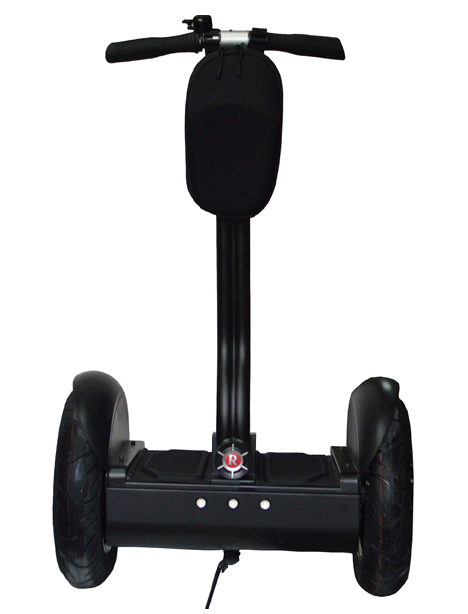
Join us for Movie Day at the library on Friday, Aug. 23, at 6 p.m. Our theme for the summer is hunger, so we are asking you to bring one can of tomatoes, tomato sauce, Rotel tomatoes, or spaghetti sauce per family, Hands free access, to be donated to Diboll Christian Outreach. Popcorn will be available. We encourage you to bring your own snacks and drinks to add to your fun. You may also bring pillows and blankets and sit on the floor to watch the movie. Come bring the family and join in the fun! Our movie license will not allow us to publicize the movie title so please call us for more information at 936-829-5497. Children under 12 must be accompanied by a parent or guardian.
“The Discovery,” by Dan Walsh – When aspiring writer Michael Warner inherits his grandfather’s venerable Charleston estate, he settles in to write his first novel. But within the confines of the stately home, he discovers an unpublished manuscript written by his grandfather, a literary giant whose novels sold in the millions. Though he had kept this novel hidden, he clearly intended that Michael should find it. As Michael delves deep into the exciting tale about spies and sabotage, he discovers something that has the power to change not only his future but his past as well.
“Daybreak,” by Shelley Shepard Gray – When Viola Keim starts working at a nearby Mennonite retirement home, she strikes up an unlikely friendship with resident Atle, whose only living relative, son Edward, is a missionary in Nicaragua. Viola understands the importance of mission work, but she can’t imagine leaving her father in the hands of strangers. It’s not in keeping with her Amish sensibilities. Though she doesn’t know Ed, Viola judges him for abandoning his father. When Ed surprises his father with a visit, both Viola and Ed are surprised by the attraction they have for each other. Despite her feelings, choosing Ed would mean moving to a far-off country and leaving her family behind – something she couldn’t possibly do. Her twin sister, Elsie, is going blind; her family is reeling with the recent discovery that her grandmother hid her past as an Englischer; her father seems forgetful and distracted and seems to be harboring some secrets of his own. Will the demand of family ties mean that her one chance at love slips away?
“Ambush,” Creek by Phil Dunlap – When U.S. Marshal Piedmont Kelly is asked by Cochise Sheriff John Henry Stevens to look into the suspicious activity of three unsavory bounty hunters, he rides into what looks like a battle’s aftermath. Bullet holes riddle a ranch house, but there’s no sign of those engaged in the gunplay. Nor is there any sign that the mysterious resident of the ranch house fits the description of the bounty hunters’ quarry. There’s nothing he can do but go looking for the missing man. Enlisting the tracking skills of his old friend Spotted Dog – the Chiricahua Apache whose life he once saved – the pair follow four horses from the rancher’s house all the way to Desert Belle, a dusty town that holds grim memories for Kelly. They ride straight into a deadly game where $50,000, several lives, and the survival of the Gilded Lily Mine are at stake.
Coverage of cyber attacks has typically focused on the dangers posed by foreign governments, or on the high-visibility strikes of social “hacktivists” like Anonymous or LulzSec. Yet many incidents stem from the work of corrupt inside officials or real time Location system, often abusing their privileged access to networks or using low-tech methods like dumping data to personal USBs and selling them for financial gain.
Defence ministries and companies make particularly attractive targets. For such institutions, the security of confidential information is vital, and any cyber breach can have serious implications for defence plans or costly procurement projects.
In March 2010, Michael Mitchell, a former marketing executive for Kevlar body armour at DuPont, was sentenced to 18 months in prison for selling trade secrets to Kolon Industries, a South Korean competitor, in exchange for consultancy work. A U.S. jury went on in September 2012 to award DuPont damages in the amount of $919.9 million.
The temptation to blame outside actors, however, remains strong across all industries. China and Russia are favourite targets. In 2011, Renault was forced to withdraw allegations of Chinese involvement in a data theft that proved to be an attempt by the firm’s own computer protection officer to fraudulently create work for a friend’s cybersecurity consulting business.
More widely, governments are acting to boost their resilience to cyber attacks. On July 30, the U.S. Senate Commerce Committee unanimously passed a new draft cybersecurity bill, despite concerns it waters down a number of changes proposed by the industry and the White House. In India, similarly, the director general of Army Signals HQ called for a vision of cyber as the “fifth dimension of warfare”, amid new worries that the country will not be able to deliver the infrastructure and expertise pledged in its National Cyber Security Policy.
Too little, however, is being done to incorporate anti-corruption efforts into cybersecurity planning, especially in the sensitive area of national defence. This is a mistake. Ensuring strong anti-corruption standards – through clear ethical leadership, risk assessments, internal training and other such good practice – is a key part of securing confidential assets.
The success or failure of defence companies to integrate such measures into their everyday practice also informs whom exactly governments choose to do business with. After all, defence contracts involve the sharing of privileged designs and information. This requires a relationship of mutual trust – especially on the cybersecurity front – which can be greatly undermined if one or more sides cannot be sure of possible corruption in the ranks.
Balance, however, is needed. The traditional focus of cybersecurity is on the restriction and protection of data. Yet such measures must also be paired with opportunities for safe, legitimate exposure of information by whistle-blowers. Employees encountering evidence of corruption in a company with fair, transparent systems for handling whistle-blower complaints will not have to resort to the messy process of leaking incriminating data to “hacktivists” or to the press.
Real cybersecurity, then, means protecting insiders from the corrupt actions of institutions, as much as protecting institutions from corrupt insiders.
It is important to get this nuance right, and to act now. Unveiling plans for a new cyber partnership between the UK Ministry of Defence, intelligence agency GCHQ and companies such as BAE, BT and Lockheed Martin, British minister Philip Dunne described the current cyber environment as a “gunpowder moment” – a potential game-changer, which, like the invention of gunpowder, could have profound security ramifications for us all.
Only organisations free of corruption can best weather this moment of transformation, guarding against external hacker threats, while also empowering whistle-blowers to protect against internal misdeeds. Cyber networks can, like gunpowder, prove a volatile material – a powerful tool in the right hands, but prone to explode spectacularly in the wrong conditions. If defence and industry leaders are not proactive in dealing with insider ethical issues, corruption might just provide the fateful spark.
Read the full products at http://www.ecived.com/en/.
Monday, August 12, 2013
Capital's role in the economic crisis
Two stories illustrate central dynamics of our time – the climate of fear generated around migration and the rise in house prices ('Go home' campaign denounced by human rights groups, Buy-to-let fuels property boom, both 9 August).
The house price rise, especially in London, is caused partly by the international movement of money as the wealthy seek to capitalise on speculative investment. At the same time those with access to money can borrow more and invest in buy-to-let properties, to profit from those who must rent. So this system works to move capital to where it will make more and to divide those who have it from those who don't. Wealth accumulates in fewer hands and and its movement produces rapid, uneven developments.
Writ large, that is the story of our world, and the free flow of capital is followed inevitably by the flow of rtls, as people move from areas of forced decline to wherever there is a prospect of work. Employers benefit from cheaper labour but the migrants are blamed for displacing unskilled workers and competing for scarce resources in housing and health.
To reverse these processes requires economic planning and wealth taxes to put accumulated private capital back towards social use; in the UK the £4.5 trillion owned by the top 10% could pay off the national debt four times or finance re-skilling, infrastructure, green technology and much else. It also requires politicians and media to stop blaming the migrants, refugees and other victims of the system, and to look instead at how to rebuild our world so it is more use to all who have to live in it.
As Larry Elliott rightly says, the proliferation of zero-hours contracts represents an increase in the "reserve army of labour" in an attempt to reverse a long-term decline in profitability (Why stop at zero hours? Why not revive child labour, 5 August). But neither this nor the other responses he mentions, such as financialisation, can ultimately overcome the tendency for profit rates to fall.
This is an inherent feature of capitalist competition, resulting not from pressure on prices but from each capitalist's attempt to raise their individual profit rate by investing in more capital-intensive production processes. The overall capital, relative to total profit, goes up, and the profit rate goes down.
Although such things as attacks on wages can offset the basic tendency, sooner or later it results in crises such as the one in progress since 2008. Since the cause is too much capital, the only cure (within capitalism) is destruction of capital through bankruptcy of less-profitable enterprises. Palliatives such as increasing workers' purchasing power can help the system limp along for a while but only at the cost of preparing a bigger and worse crisis.
Said quarterback Andrew Luck: "He's a phenomenal football player. He's going to make plays. You do sort of say, 'All right, T.Y.' He's going to do something special when he's on the field. He has that factor to him."
It's been a long time, maybe forever, since the Colts have had anyone like Hilton. And to think, the Colts got Hilton in the third round with the 92nd pick. Twelve receivers went before him, in large part because a quadriceps injury kept him out of the Senior Bowl and the NFL Scouting Combine."That bothered me," Hilton said. "I've always played with a chip on my shoulder."
Indy has learned quickly, Hilton is much more than simply a burner. He's got hands. He's a superior route runner. And he's a student of the game, having spent the off-season studying what it is that has made Reggie Wayne so great all these years. Specifically, he spent the summer studying Wayne's footwork and his ability to come back to the football.
The same couldn't be said of the Colts in general, who looked awful their first time out. But again, Indoor Positioning System. How many times did the Colts go winless prior to ripping off another 12-win season? If they look this bad in the third game, then howl.
It's darned near impossible to offer sober analysis on a first preseason game, especially with so many starters either sitting or playing only two series. Keep in mind, Buffalo played many of its first-team players deep into the first half, using rookie quarterback E.J. Manuel the entire half.
The house price rise, especially in London, is caused partly by the international movement of money as the wealthy seek to capitalise on speculative investment. At the same time those with access to money can borrow more and invest in buy-to-let properties, to profit from those who must rent. So this system works to move capital to where it will make more and to divide those who have it from those who don't. Wealth accumulates in fewer hands and and its movement produces rapid, uneven developments.
Writ large, that is the story of our world, and the free flow of capital is followed inevitably by the flow of rtls, as people move from areas of forced decline to wherever there is a prospect of work. Employers benefit from cheaper labour but the migrants are blamed for displacing unskilled workers and competing for scarce resources in housing and health.
To reverse these processes requires economic planning and wealth taxes to put accumulated private capital back towards social use; in the UK the £4.5 trillion owned by the top 10% could pay off the national debt four times or finance re-skilling, infrastructure, green technology and much else. It also requires politicians and media to stop blaming the migrants, refugees and other victims of the system, and to look instead at how to rebuild our world so it is more use to all who have to live in it.
As Larry Elliott rightly says, the proliferation of zero-hours contracts represents an increase in the "reserve army of labour" in an attempt to reverse a long-term decline in profitability (Why stop at zero hours? Why not revive child labour, 5 August). But neither this nor the other responses he mentions, such as financialisation, can ultimately overcome the tendency for profit rates to fall.
This is an inherent feature of capitalist competition, resulting not from pressure on prices but from each capitalist's attempt to raise their individual profit rate by investing in more capital-intensive production processes. The overall capital, relative to total profit, goes up, and the profit rate goes down.
Although such things as attacks on wages can offset the basic tendency, sooner or later it results in crises such as the one in progress since 2008. Since the cause is too much capital, the only cure (within capitalism) is destruction of capital through bankruptcy of less-profitable enterprises. Palliatives such as increasing workers' purchasing power can help the system limp along for a while but only at the cost of preparing a bigger and worse crisis.
Said quarterback Andrew Luck: "He's a phenomenal football player. He's going to make plays. You do sort of say, 'All right, T.Y.' He's going to do something special when he's on the field. He has that factor to him."
It's been a long time, maybe forever, since the Colts have had anyone like Hilton. And to think, the Colts got Hilton in the third round with the 92nd pick. Twelve receivers went before him, in large part because a quadriceps injury kept him out of the Senior Bowl and the NFL Scouting Combine."That bothered me," Hilton said. "I've always played with a chip on my shoulder."
Indy has learned quickly, Hilton is much more than simply a burner. He's got hands. He's a superior route runner. And he's a student of the game, having spent the off-season studying what it is that has made Reggie Wayne so great all these years. Specifically, he spent the summer studying Wayne's footwork and his ability to come back to the football.
The same couldn't be said of the Colts in general, who looked awful their first time out. But again, Indoor Positioning System. How many times did the Colts go winless prior to ripping off another 12-win season? If they look this bad in the third game, then howl.
It's darned near impossible to offer sober analysis on a first preseason game, especially with so many starters either sitting or playing only two series. Keep in mind, Buffalo played many of its first-team players deep into the first half, using rookie quarterback E.J. Manuel the entire half.
Subscribe to:
Posts (Atom)